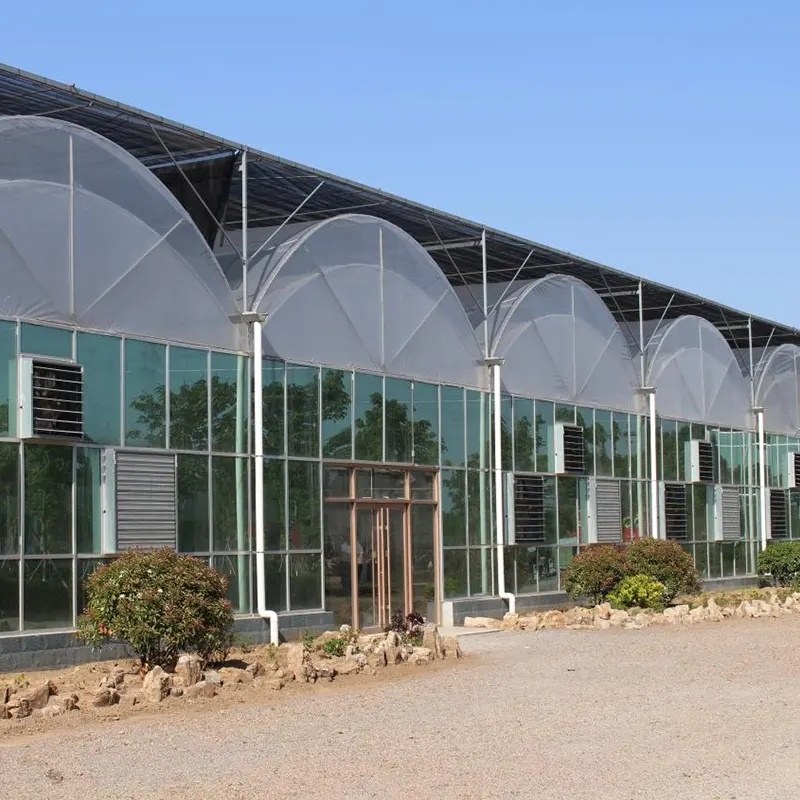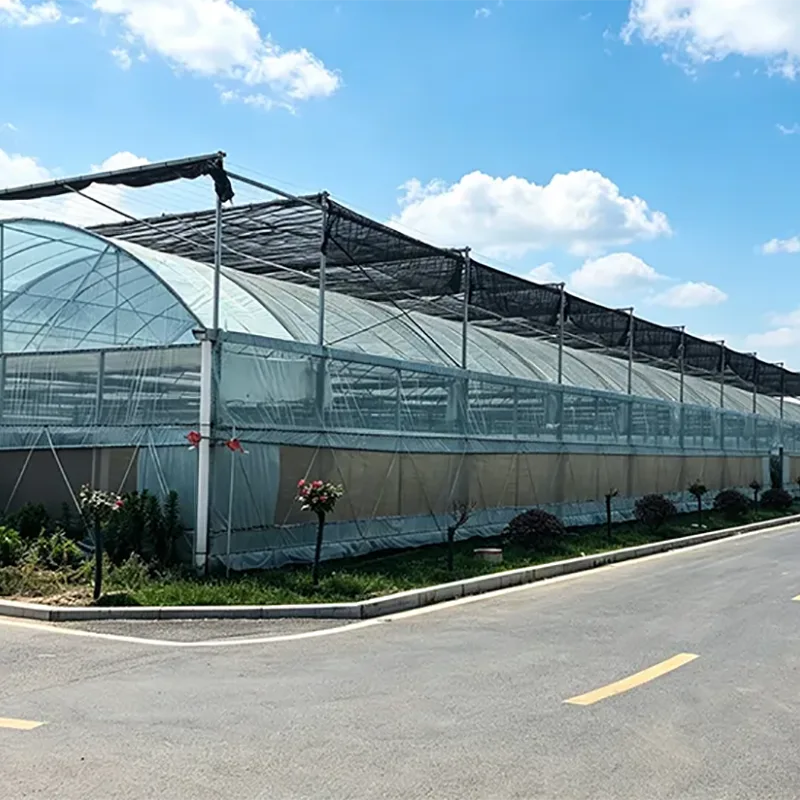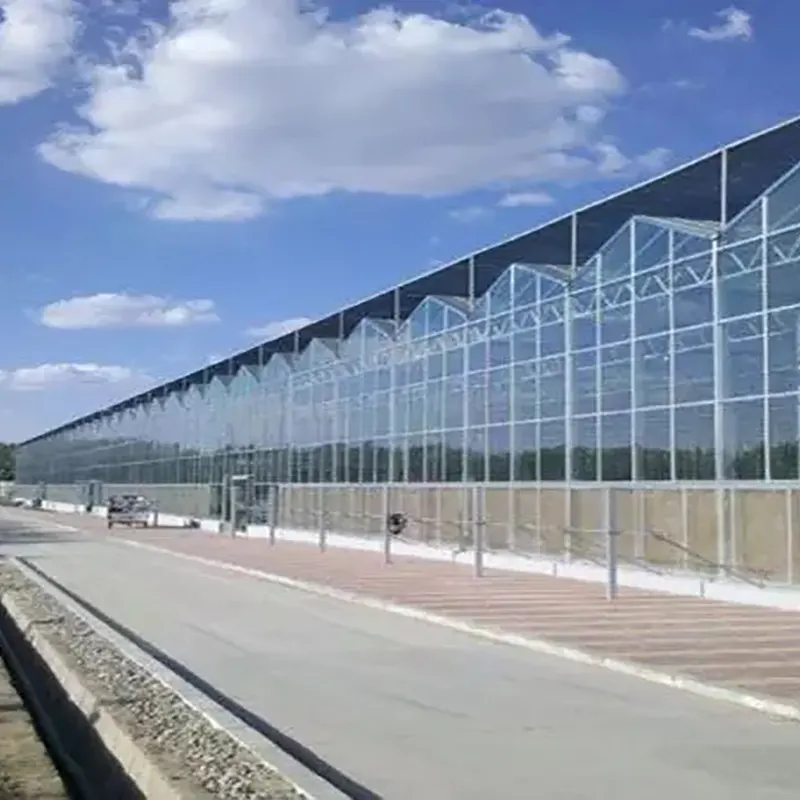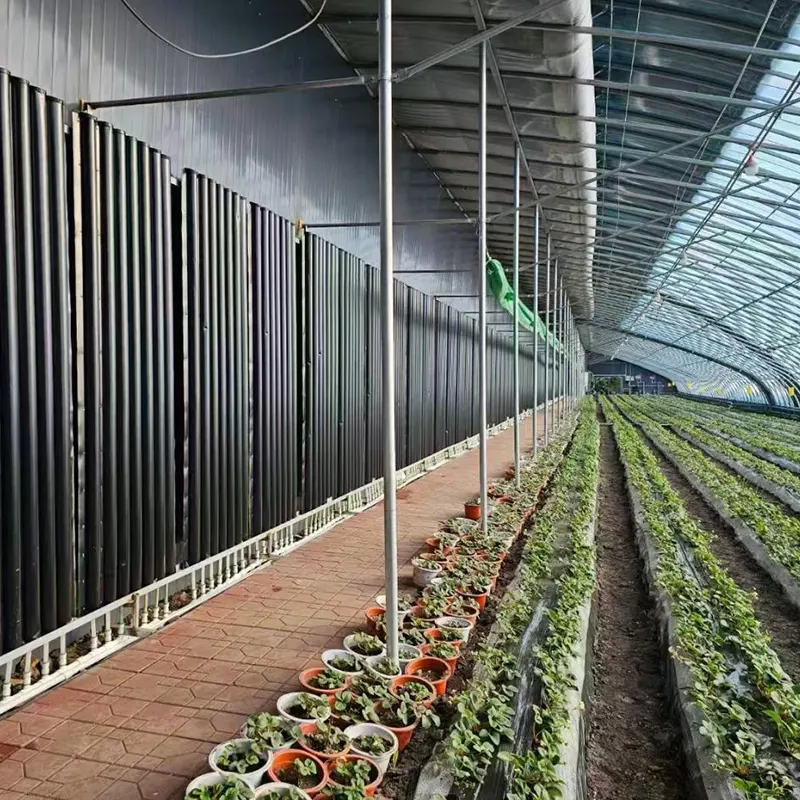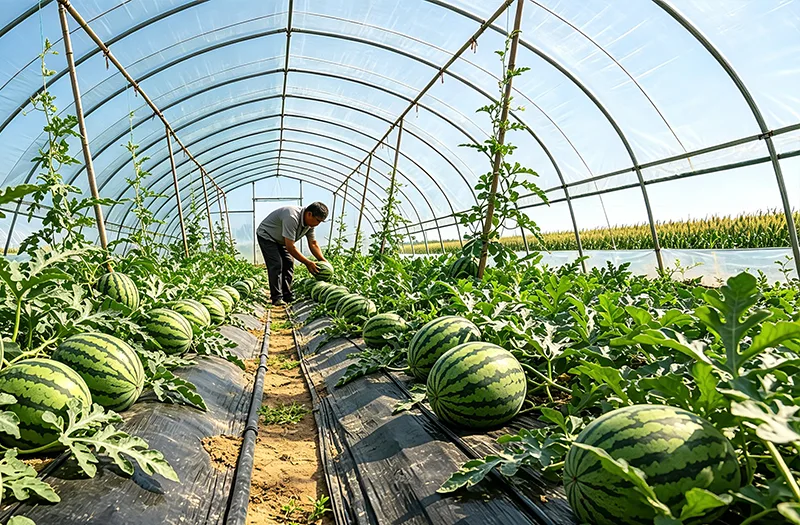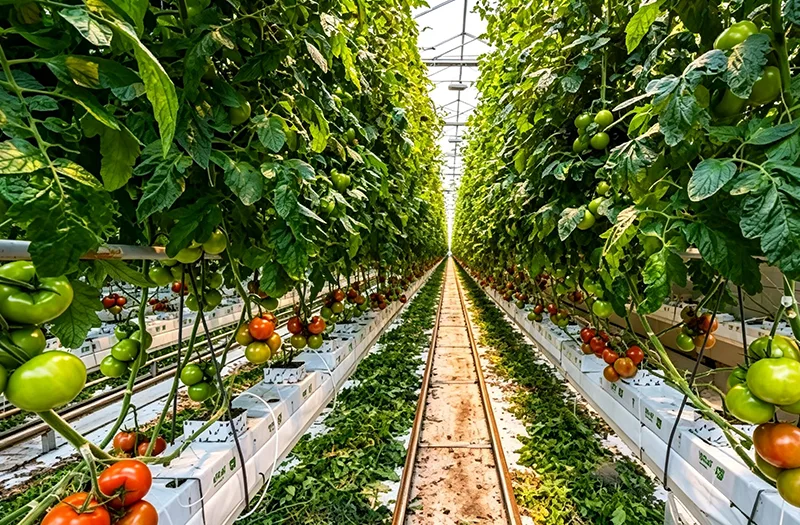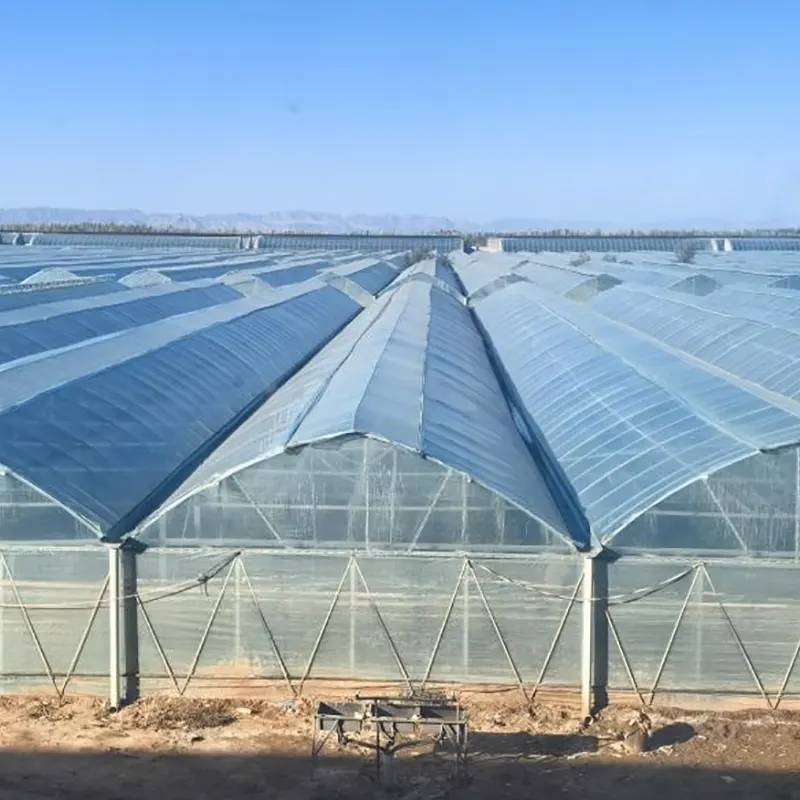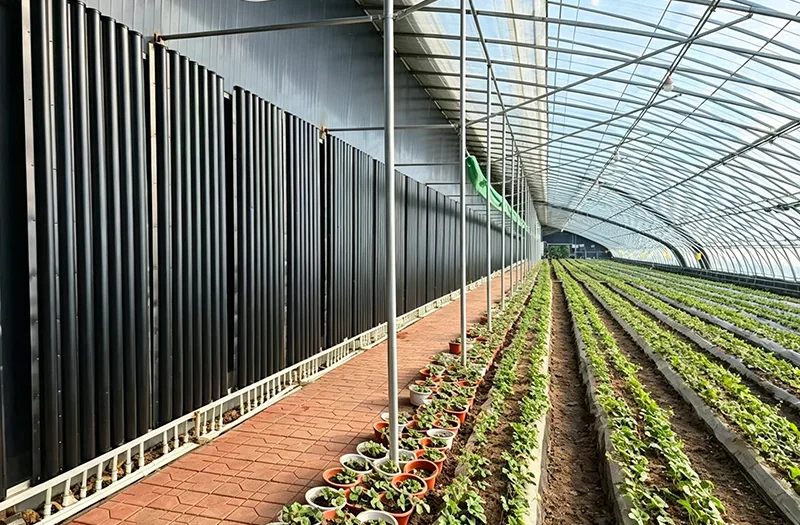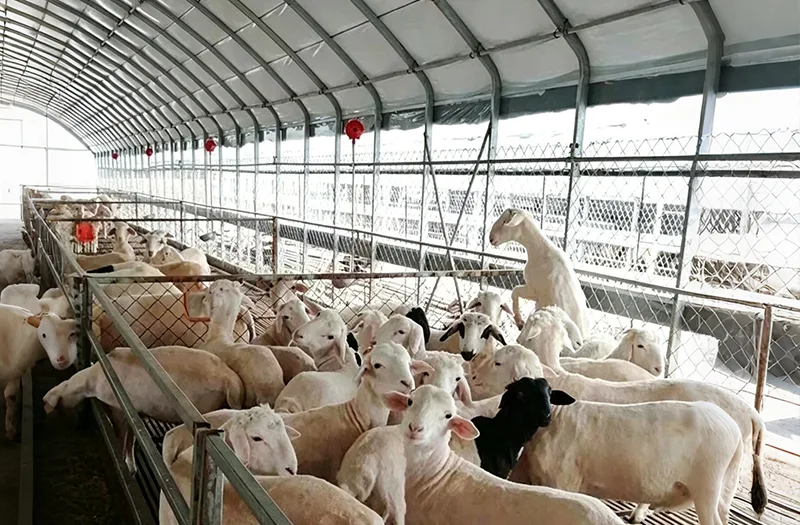
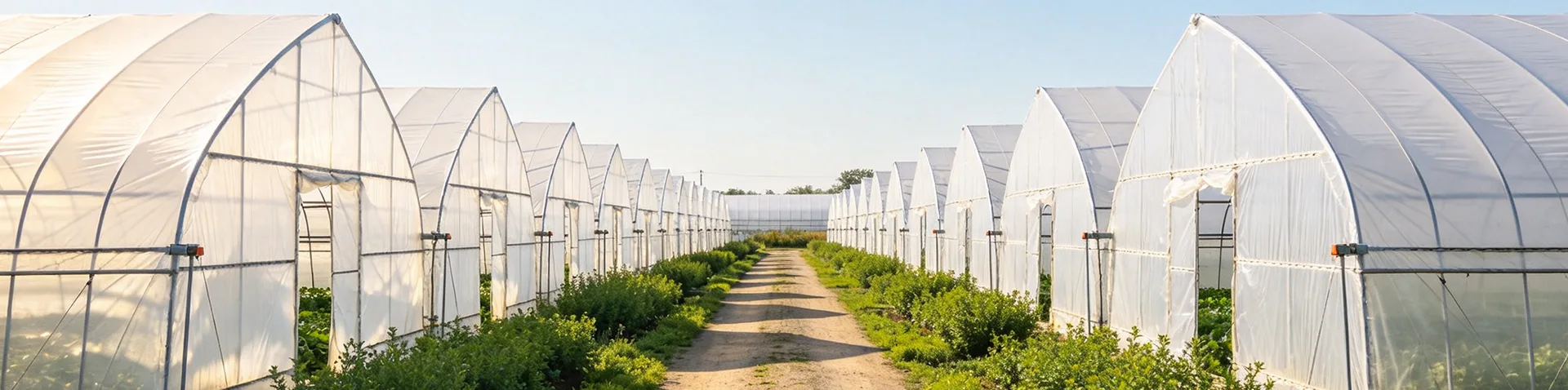
For agricultural projects that need better insulation during cold seasons, Ruize Steel offers Double-Layer Film Greenhouses manufactured in China for winter cultivation, early-season seedling production and high-value crops. As a China manufacturer of greenhouse structures, Ruize Steel supports customized procurement with welded-truss and prefabricated frame options, helping growers select a configuration suited to local wind, snow and temperature conditions.
The double-layer film structure creates an insulating air layer between two layers of covering material, helping reduce heat loss compared with a single-layer film greenhouse. Four configurations are available: welded-truss and prefabricated frames in both single-slope and round-arch designs. Each option differs in structural strength, snow shedding, installation time, transportation requirements and overall cost.
The air layer between the two film coverings helps reduce heat transfer and maintain a more stable indoor environment. This configuration is suitable for overwintering crops and early-season seedlings that require additional protection from low temperatures.
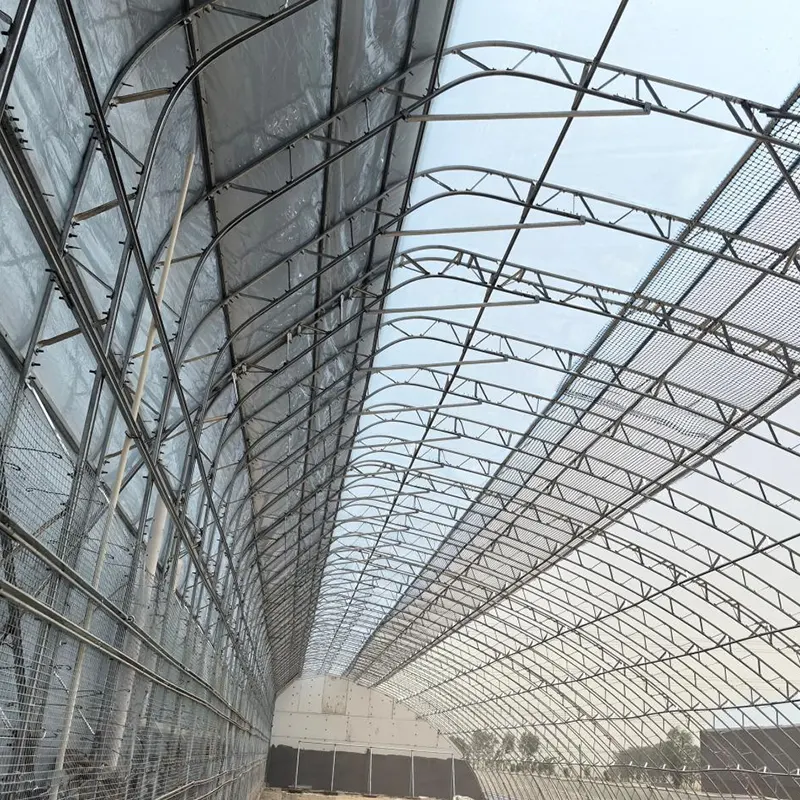
The frame is designed to support the installation of two film layers. Properly installed film channels, retaining springs and sealing components help keep the covering secure and reduce air leakage through gaps.
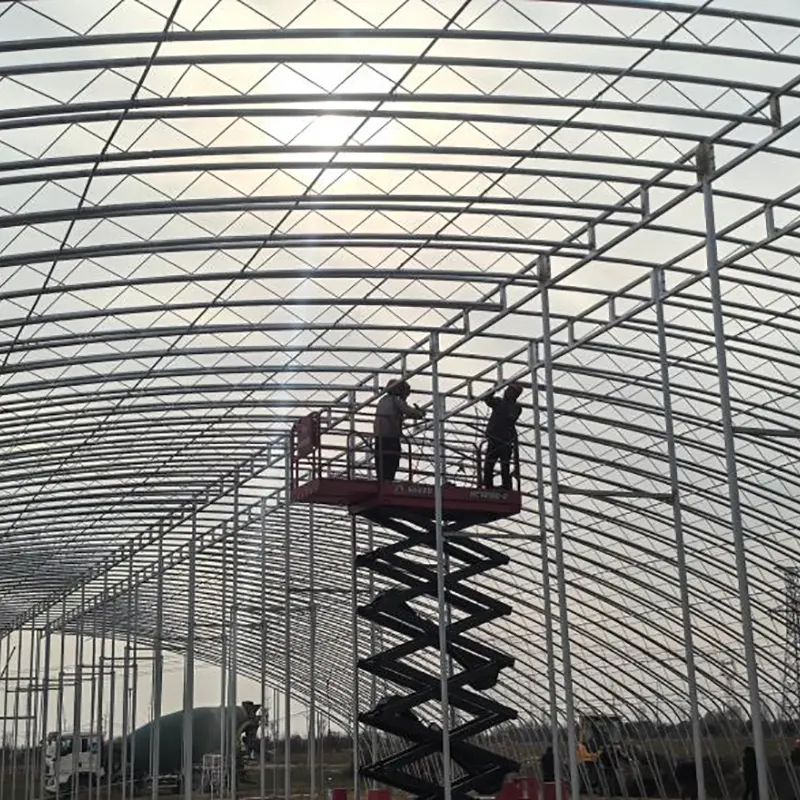
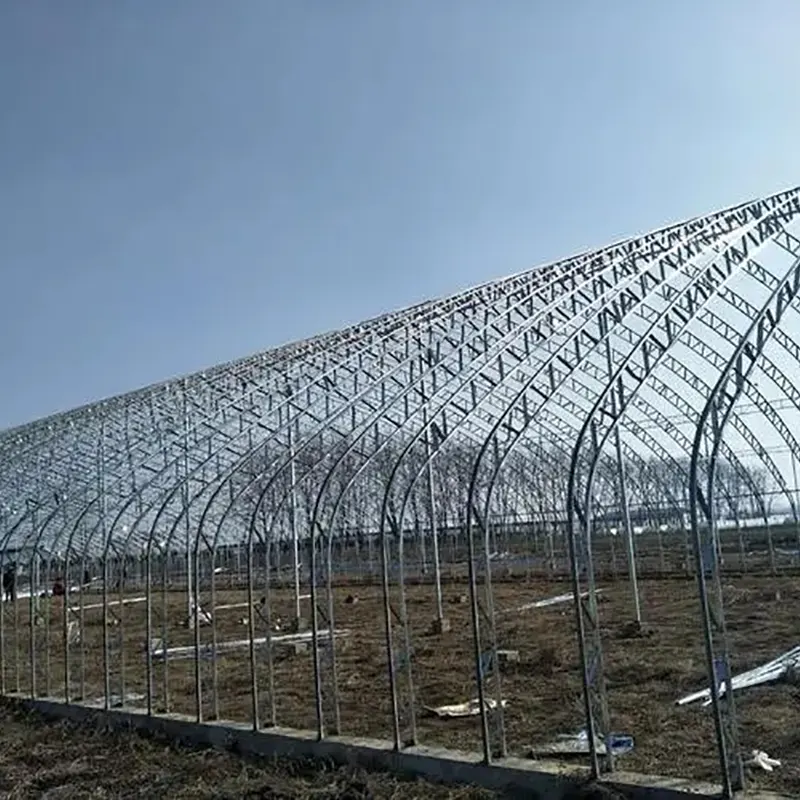
Welded-truss frames provide a heavier-duty option for projects requiring greater structural strength, while prefabricated frames use bolted connections for convenient assembly and dismantling. Both frame types are available in single-slope and round-arch designs.
The single-slope design supports heat retention through its rear-wall structure, while the round-arch roof allows snow to slide off more readily when conditions permit. The appropriate design should be selected according to local snowfall, wind exposure and structural load requirements.
Prefabricated frames can be dismantled and reassembled when designed for that purpose, making them practical for projects where relocation or future reuse may be required. Their separated components can also help reduce shipping volume compared with transporting larger welded assemblies.
The table below compares the four main configurations to help with structural selection and project planning.
| Comparison Item | Welded-Truss Single-Slope Greenhouse | Prefabricated Single-Slope Greenhouse | Welded-Truss Round-Arch Greenhouse | Prefabricated Round-Arch Greenhouse |
|---|---|---|---|---|
| Manufacturing and Assembly | Factory-welded frame assembly | Bolted modular assembly | Factory-welded frame assembly | Bolted modular assembly |
| Roof Design | Single-slope solar greenhouse roof | Single-slope solar greenhouse roof | Curved, semi-circular arch roof | Curved, semi-circular arch roof |
| Structural Strength | Heavy-duty, high-load configuration | Standard load configuration | Heavy-duty, high-load configuration | Standard load configuration |
| Snow Shedding | Moderate; periodic manual snow removal may be required | Moderate; periodic manual snow removal may be required | Good; the curved roof helps snow slide off | Good; the curved roof helps snow slide off |
| Heat Retention | Very good, supported by the rear heat-storage wall | Good for conventional overwintering requirements | Good, with a more open interior and effective ventilation options | Good, balancing insulation and ventilation requirements |
| Installation Time | Moderate; lifting and assembly work is required | Shortest; components can be assembled quickly by installation teams | Moderate; lifting and assembly work is required | Shortest; components can be assembled quickly by installation teams |
| Dismantling and Reuse | Generally intended for fixed installation and not designed for complete dismantling | Can be dismantled and reused when properly installed and maintained | Generally intended for fixed installation and not designed for complete dismantling | Can be dismantled and reused when properly installed and maintained |
| Transportation | Larger assembled components may increase shipping volume and cost | Separated components help reduce packing volume and transportation costs | Larger assembled components may increase shipping volume and cost | Separated components help reduce packing volume and transportation costs |
| Cold-Climate Suitability | Intended for severe cold conditions around -25°C or below, subject to the complete design | Intended for conventional cold regions with temperatures around -20°C, subject to insulation and heating requirements | Intended for severe cold and snowy regions, subject to structural design | Intended for conventional cold regions with temperatures around -20°C, subject to insulation and heating requirements |
| Relative Cost | Higher-end configuration | Lowest-cost option among the four | Higher-end configuration | Moderate, budget-conscious configuration |
| Main Advantage | High structural strength, fixed installation and strong heat retention | Lower cost, fast assembly and convenient relocation | Heavy-duty structure with a curved roof suited to snowy regions | Snow-shedding roof, insulation performance and cost-effective modular installation |
The production process is organized to ensure that the frame and double-layer covering components fit together correctly.
Process flow: Steel selection for cold-climate applications → Fabrication of dedicated double-layer film frames → Precision punching of film channels → Structural reinforcement and welding where specified → Overall hot-dip galvanizing for corrosion protection → Inspection of film compatibility and installation flatness → Accessory matching and packaging.
Install the two film layers evenly and maintain the required separation between them. Keep the space between the layers free from trapped water and excessive moisture to reduce the risk of condensation-related problems and mold.
Secure all film channels, retaining springs and related fasteners correctly. Check the connections carefully to reduce the risk of film loosening or detachment during strong winds.
Inspect the joints, edges and connection points throughout the greenhouse. Proper sealing helps limit cold-air infiltration and improves the effectiveness of the double-layer insulation.
For locations with heavy snowfall, consider the welded-truss heavy-duty configuration where appropriate. The final frame specifications must be selected according to local snow loads, wind conditions, foundations and covering requirements.
Consider a welded-truss Double-Layer Film Greenhouse when higher structural strength and long-term fixed installation are priorities. The round-arch version is worth evaluating in snowy areas because its curved roof helps shed snow, while the single-slope version offers the heat-retention advantages of a rear wall.
The prefabricated frame is a practical option for projects that prioritize lower costs, fast installation and the possibility of dismantling or relocation. Select the roof design according to local snowfall and the required heat-retention arrangement.
Consider high-transmission greenhouse film where adequate natural light is important for seedlings. Film specifications should balance light transmission, insulation and durability according to the crop and local climate.
Double-layer film greenhouses are suitable for overwintering vegetables, early-season seedling production, high-value crop cultivation and other agricultural projects that require additional insulation during cold weather.
They can be used as individual greenhouses or in multi-house layouts. For larger projects, the arrangement of ventilation, drainage, film-rolling and temperature-control equipment should be planned together with the greenhouse structure.
Ruize Steel offers four Double-Layer Film Greenhouse configurations to accommodate different structural loads, climate conditions, installation methods and transportation requirements. Customers can compare welded-truss and prefabricated frames in both single-slope and round-arch designs before confirming the most suitable option.
Frame specifications, covering systems and accessories can be coordinated according to the intended crop and local weather conditions. For overseas projects, prefabricated components can be packaged separately to facilitate transportation and on-site assembly, while heavier welded configurations can be considered for permanent installations requiring reinforced structures.
The air layer between the two films provides additional insulation, helping reduce heat loss and maintain a more stable indoor environment during cold weather.
Welded-truss frames suit fixed installations requiring higher structural strength. Prefabricated frames are more suitable when lower cost, faster assembly or future relocation is important.
The single-slope design is suitable for projects prioritizing heat retention. The round-arch design helps shed snow and may be preferable in regions with heavier snowfall.
Removing or opening the inner film during warm weather can improve ventilation and reduce excessive heat buildup. Reinstall it when temperatures fall and additional insulation is needed.
When correctly assembled with suitable fasteners, bracing and foundations, it can provide a stable structure. The design must meet local wind and snow-load requirements.
Yes. Optional equipment includes electric curtain systems, film-rolling ventilation, integrated irrigation and fertigation, and intelligent temperature control.
Yes. Prefabricated single-slope and round-arch models can be packed into separate components for transportation and assembled on site with appropriate installation guidance.
Yes. Multiple units can be arranged in connected layouts, with drainage, ventilation and curtain systems coordinated for easier management.
Yes. Thicker steel sections and closer arch spacing can be specified for projects requiring greater strength in areas with strong winds or heavy snowfall, subject to structural design.
Copyright © 2026 Tianjin Ruize Steel Co., Ltd. All Rights Reserved.