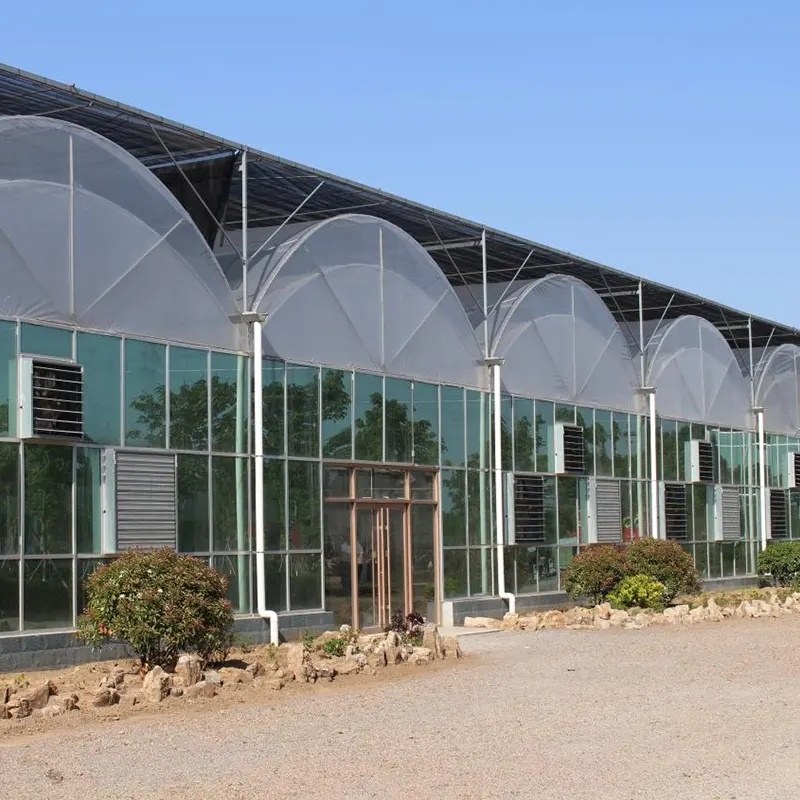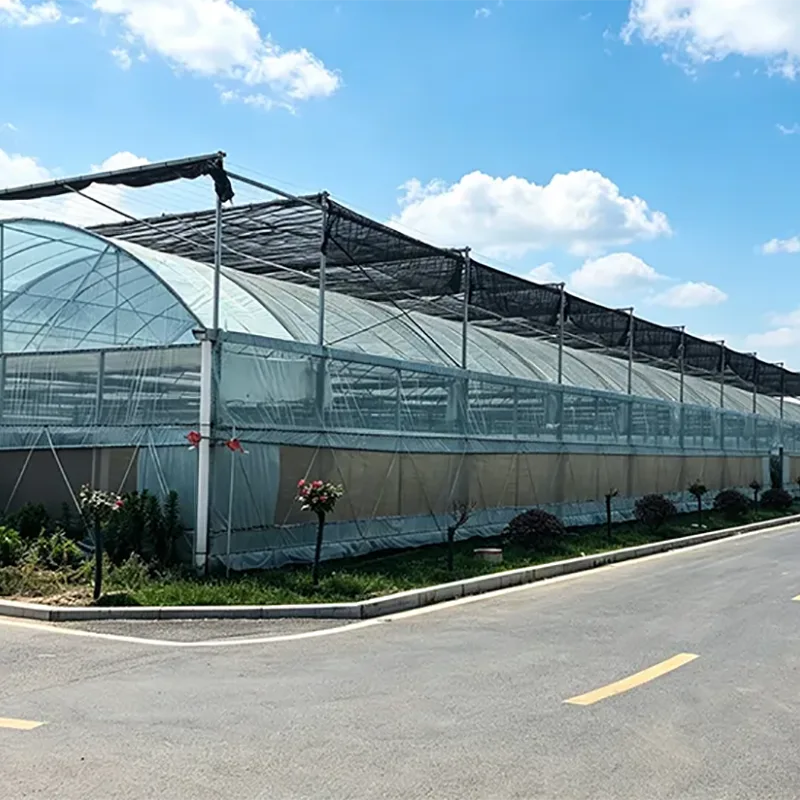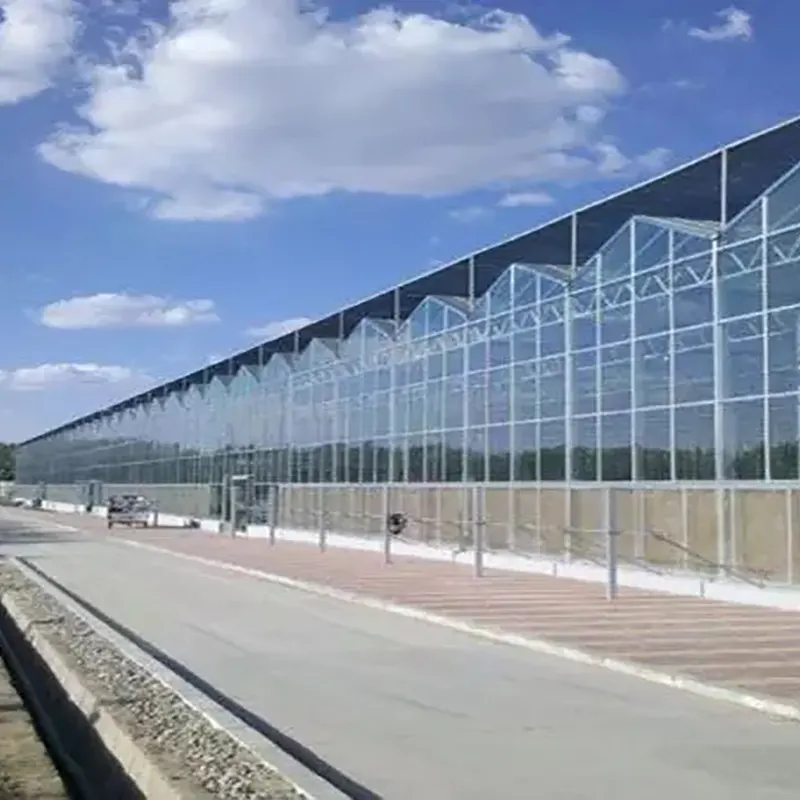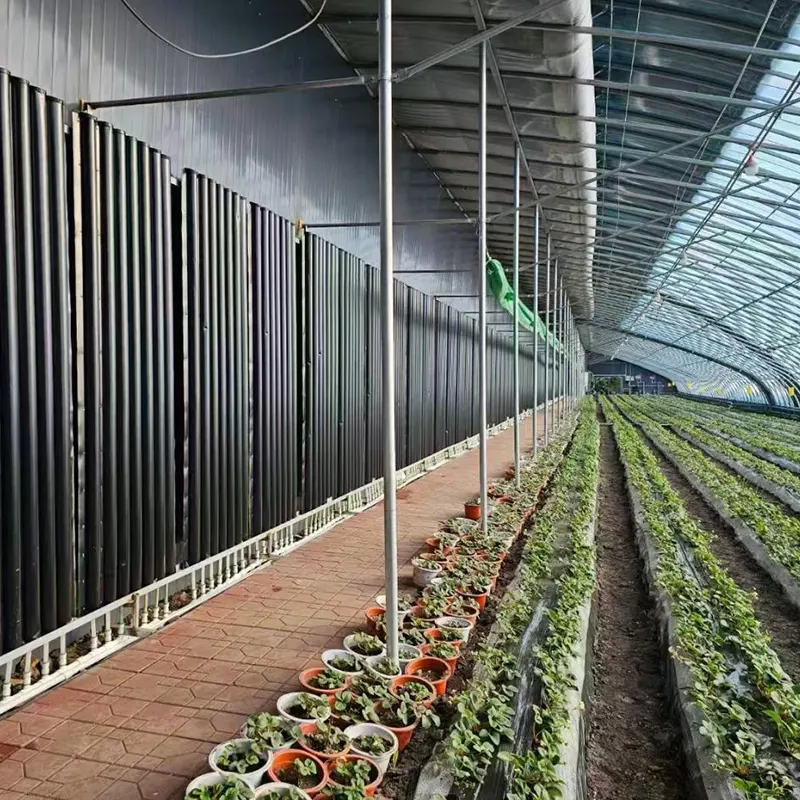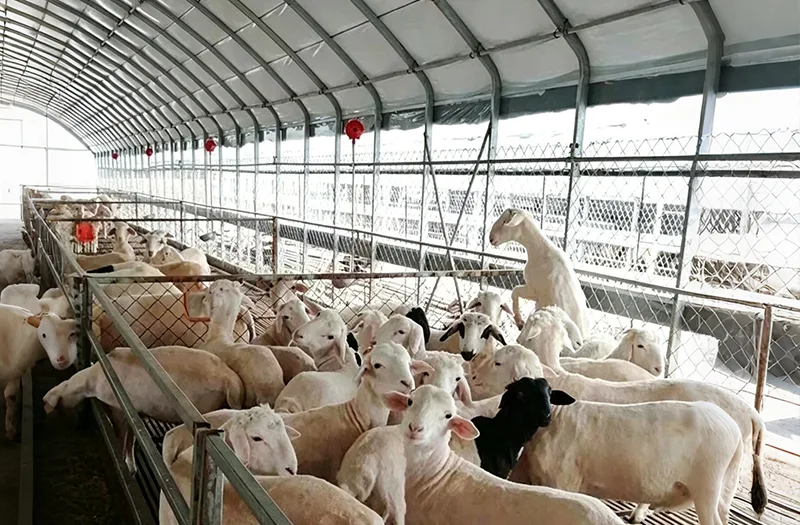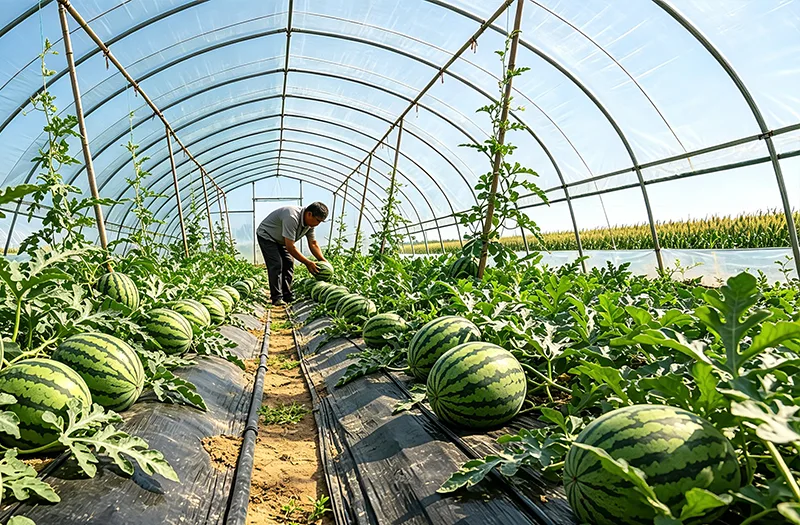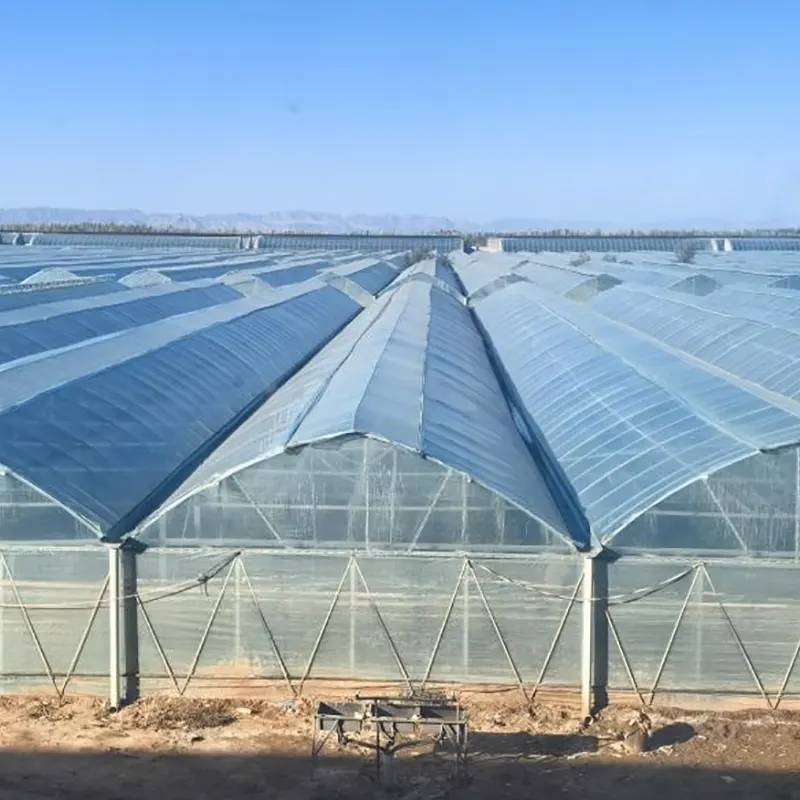
Ruize Steel is a China manufacturer supplying Multi-Span Solar Greenhouses for large-scale winter cultivation and modern agricultural projects. These multi-span greenhouses can be equipped with internal or external insulation systems to reduce heat loss and support crop production during cold seasons. Designed for connected greenhouse installations, they are suitable for large agricultural parks, winter vegetable production and projects requiring more stable indoor temperatures. Bulk procurement and customized configurations are available according to project size, local climate and insulation requirements.
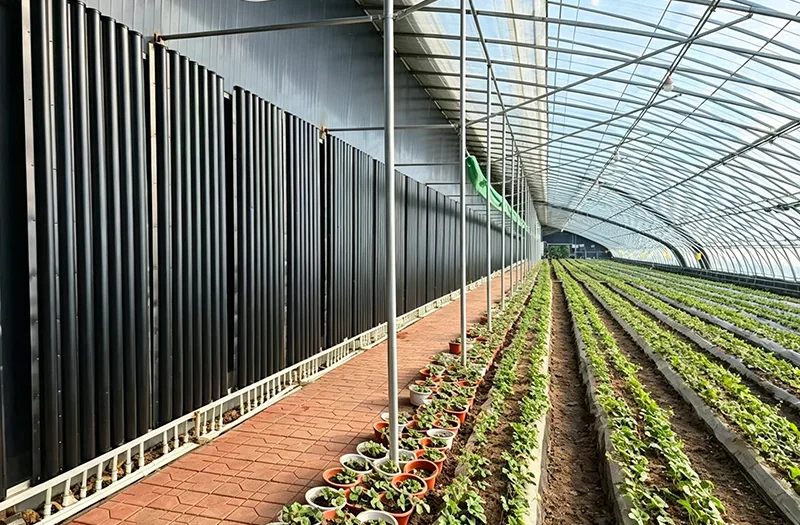
The internal insulation option uses an insulating curtain installed beneath the greenhouse roof, while the external insulation option uses waterproof thermal blankets placed over the roof. The appropriate system depends on winter temperatures, rainfall, snowfall, summer ventilation requirements and the intended crops.
The insulation system is designed to cover connected greenhouse areas, helping reduce heat loss and maintain more consistent indoor conditions across the growing space.
The insulation system is coordinated with the greenhouse frame and operating mechanism during configuration, reducing the need for improvised modifications after installation.
A properly configured insulation system helps reduce temperature differences within large growing areas, supporting more uniform crop management across connected spans.
Electric drive systems and limit controllers can be configured with an optional intelligent control cabinet and temperature sensors to automate the opening and closing of the insulation layer according to preset conditions.
The connected layout supports large cultivation areas, while insulation equipment can be arranged in separate control zones where required. The structure and equipment can be planned together to simplify installation and operation.
The main differences between internal and external insulation concern installation position, cold-weather performance, maintenance and construction cost. The following table provides a reference for selecting a suitable system.
| Comparison Item | Internal-Insulation Multi-Span Greenhouse | External-Insulation Multi-Span Greenhouse |
|---|---|---|
| Insulation Structure | Insulating curtains installed beneath the greenhouse roof | Waterproof thermal blankets installed over the roof |
| Cold-Weather Performance | Moderate, suitable for winter cultivation in relatively mild regions | High, designed for consideration in extremely cold conditions down to approximately -25°C, subject to the complete greenhouse configuration |
| Interior Space | Occupies some overhead space and slightly reduces the available interior height | Does not occupy interior growing space |
| Insulation Material Exposure | Protected from direct rain and snow, which can help reduce weather-related wear | Exposed to outdoor weather and requires suitable waterproof, durable thermal blankets |
| Summer Ventilation and Cooling | Compatible with external shading and roof vents when correctly configured | Thermal blankets must be fully retracted or removed from the roof area as required before summer operation |
| Maintenance Requirements | Generally lower exposure to moisture and direct weather damage | Periodic inspection of blankets, drive systems and weather-exposed components is important |
| Heating Energy Requirements | Moderate in mild climates; supplementary heating demand may be higher in severe cold | May reduce supplementary heating fuel use by more than 30% in severe cold, depending on site conditions and system configuration |
| Suitable Regions | Humid southern regions, areas with frequent fog or rain, and temperate climates | Northern regions with heavy snowfall, strong winds, low temperatures and high-latitude conditions |
| Relative Construction Cost | Generally lower initial cost | Generally higher due to the additional external insulation equipment |
| Main Advantage | Moisture protection, convenient maintenance and lower initial investment | Stronger insulation potential for severe winter conditions without reducing interior growing space |
Ruize Steel provides customized insulation configurations for large-scale Multi-Span Solar Greenhouses. The process typically includes the following steps:
Regularly check thermal blankets, insulating curtains, motors and rolling mechanisms to ensure smooth operation. Repair damaged components promptly.
Inspect doors, joints and other openings for air leakage during cold periods. Seal gaps where necessary to help reduce heat loss.
Inspect and maintain the insulation drive system when changing between winter and summer operating modes. Follow the equipment manufacturer's maintenance instructions.
Monitor roof snow accumulation according to local weather conditions and the greenhouse's design snow load. Remove snow or retract the external insulation blankets only as permitted by the system design and safe operating procedures.
The external-insulation configuration is worth considering where strong insulation performance is a priority. The frame, covering and insulation system must be designed for the local wind and snow loads.
The internal-insulation configuration is generally a practical option for regions with moderate winters, frequent humidity or rainfall, and a preference for lower initial investment.
A combination of internal and external insulation may be considered for projects with demanding temperature requirements. Multiple independent drive systems can also be configured for separate insulation control zones.
Multi-span insulated greenhouses are suitable for large agricultural parks, winter vegetable production, seedling cultivation, flower growing and other commercial cultivation projects requiring improved cold-season temperature management.
The insulation system can be selected according to the crop, greenhouse covering, local weather conditions and planned operating schedule. Greenhouse structures may use film, polycarbonate panels or glass, provided the selected insulation system is compatible with the roof structure.
External insulation is generally preferable for severe winters and heavy snowfall. Internal insulation is often more economical in relatively mild, humid regions.
Yes. The two systems can operate independently, allowing seasonal changes between winter heat retention and summer shading.
Yes. The roof and frame must be designed for local snow loads. Follow the operating instructions for managing blankets during heavy snowfall.
Yes, subject to compatibility with the specific greenhouse structure and insulation system.
Yes. Electric drives and limit controllers are available, with an optional intelligent control cabinet and temperature sensors.
Yes. Multiple drive systems can be configured to control different zones independently.
Yes. A double-insulation configuration can be customized for projects requiring additional heat retention, subject to structural and operating requirements.
In many cases, yes. The existing frame and mounting points should be assessed before adding or changing the insulation system.
Yes. Bulk project orders can be discussed, with connected-span layouts, ventilation equipment and temperature-control systems coordinated during project planning.
Copyright © 2026 Tianjin Ruize Steel Co., Ltd. All Rights Reserved.