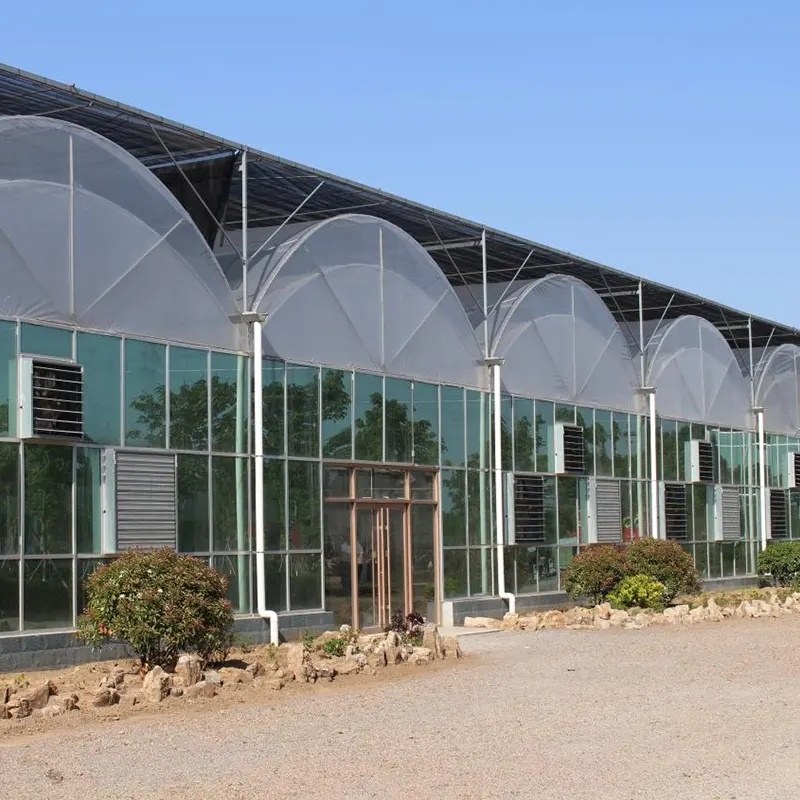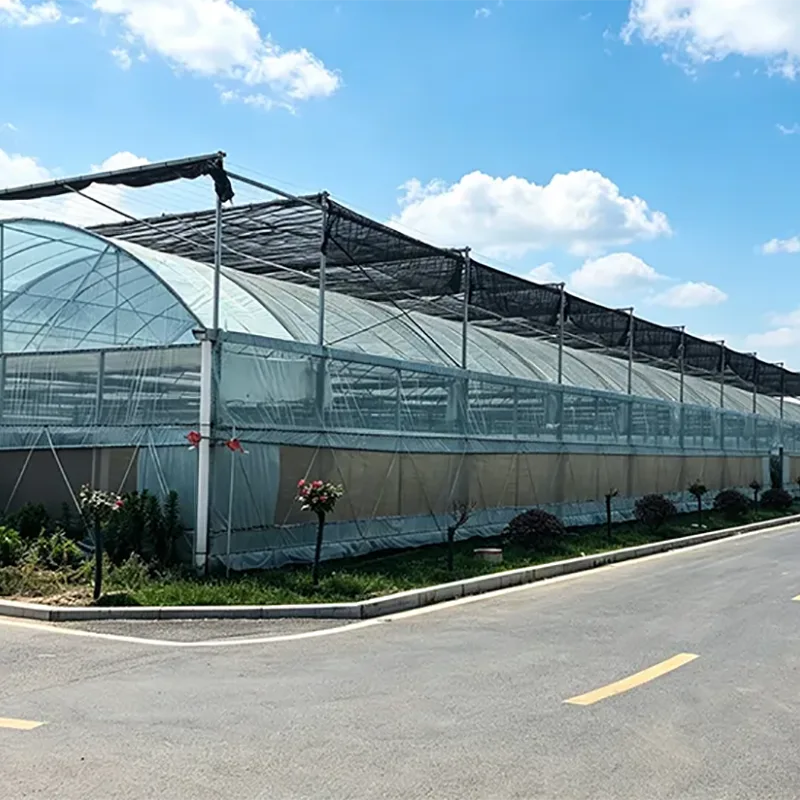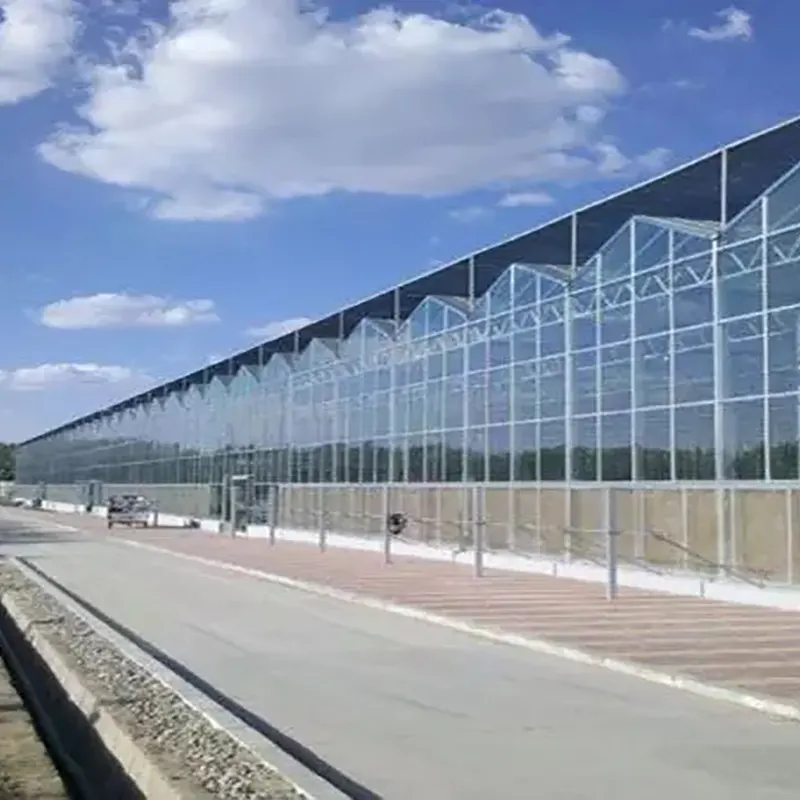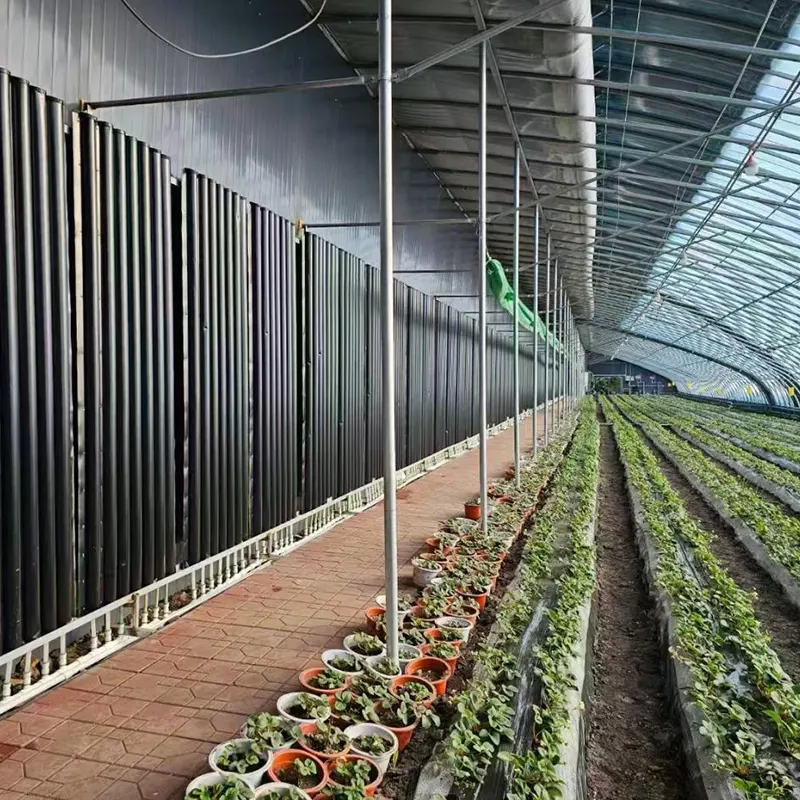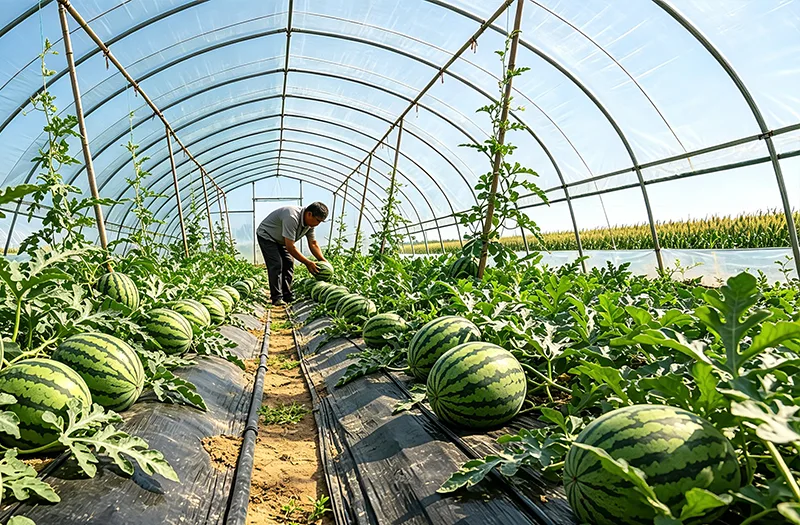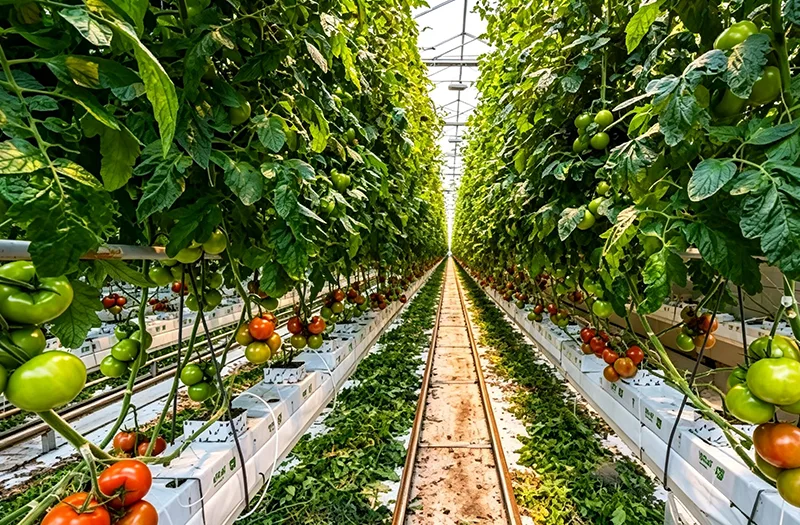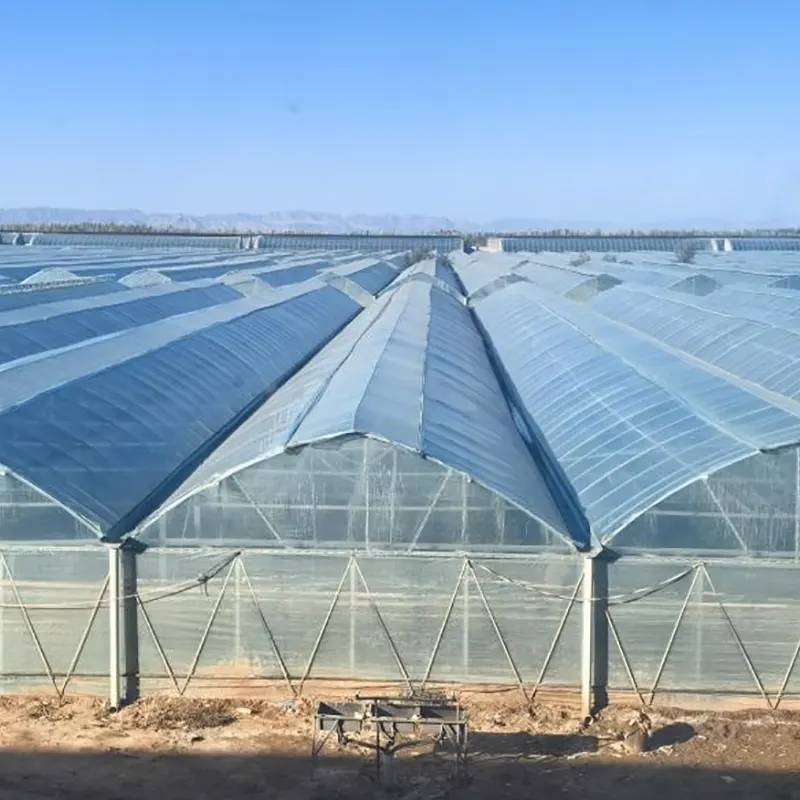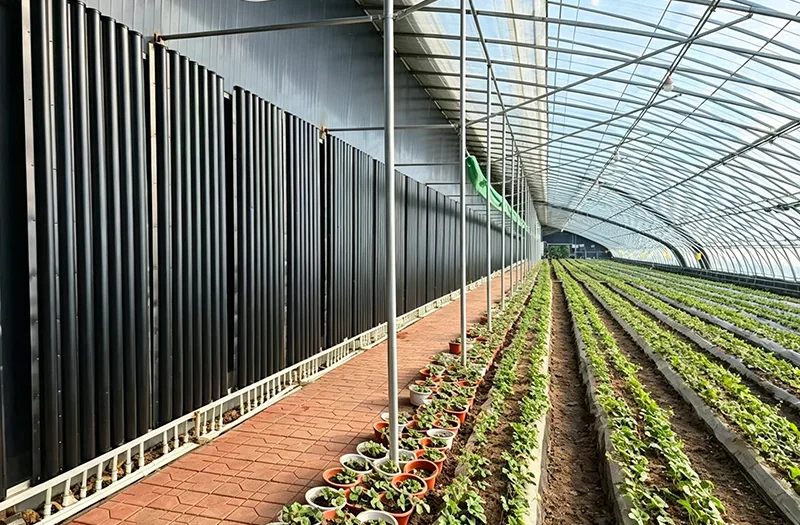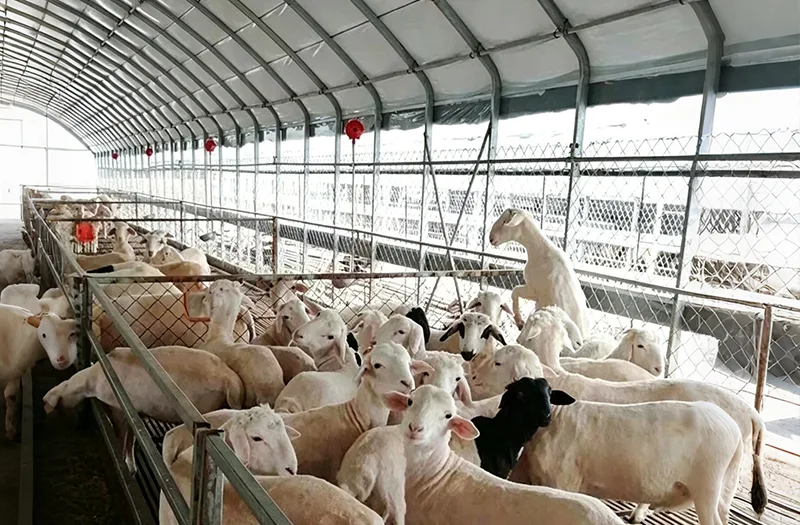
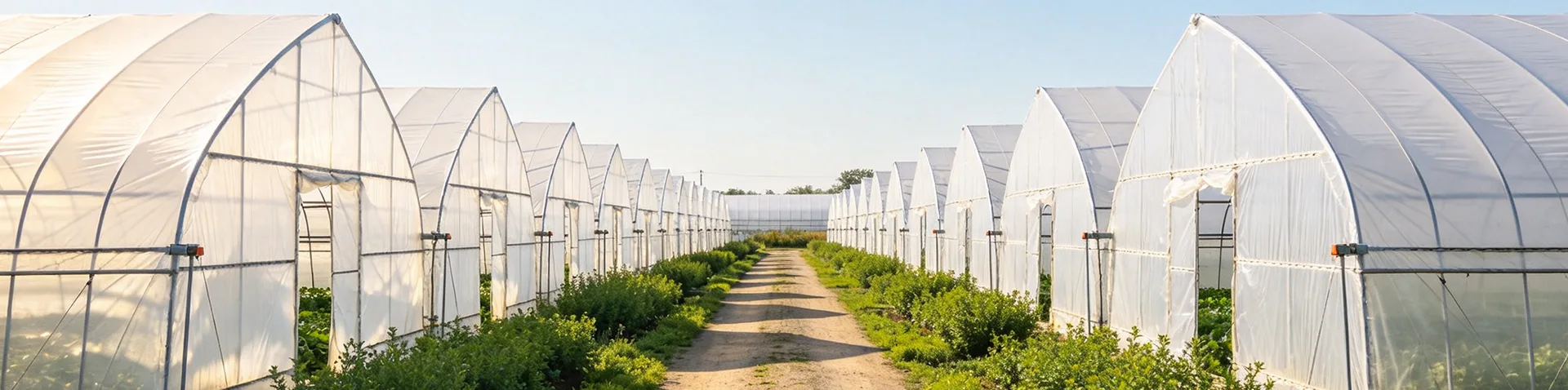
Ruize is a China manufacturer specializing in Agricultural Greenhouses, with capabilities covering steel profile production, structural processing, greenhouse solution customization, design, and installation. The product range is developed for different levels of open-field farming upgrades, from seasonal crop protection and nursery production to larger cultivation bases. Depending on the application, Agricultural Greenhouses can be configured with hot-dip galvanized steel frames and light-transmitting coverings such as film, polycarbonate sheets, or glass.
Agricultural Greenhouses are not limited to one crop or one operating method. The appropriate structure can be selected according to the growing season, crop type, site conditions, and required level of protection. Simple configurations are suitable for seasonal planting and nursery work, while reinforced structures can be developed for longer-term operation and more demanding agricultural environments.
The greenhouse range can support crop cultivation, nursery production, rain protection, winter growing, and early-season planting. This flexibility allows growers to select one basic structural platform and add suitable systems as their cultivation requirements change.
Ruize uses standardized galvanized steel profiles as the basis of the greenhouse structure. Depending on the project, additional systems such as shading, ventilation, irrigation, spraying, and insulation can be incorporated without replacing the entire structural system.
Greenhouse dimensions and structural arrangements can be adjusted for different agricultural sites, including flat farmland, sloped areas, dry land, and other locations with specific installation conditions. The final design should be based on local soil, wind, snow, rainfall, and site-access conditions.
The product range includes economical greenhouse configurations as well as reinforced engineering structures. This allows small growers, family farms, and larger agricultural projects to choose a configuration that matches their intended scale and operating requirements.
For customers sourcing Agricultural Greenhouses from China, structural components are prepared with transportation and onsite assembly in mind.
Greenhouse selection should start with the intended use rather than the structure alone. A short-term seasonal project and a long-term commercial cultivation base may require very different levels of insulation, reinforcement, ventilation, and equipment integration.
| Project Requirement | Recommended Configuration |
| Seasonal cultivation and fruit or vegetable nursery work | Economical simple Agricultural Greenhouses |
| Rain protection in regions with frequent rainfall | Reinforced rain-protection greenhouse with suitable ventilation |
| Autumn and winter cultivation | Insulated greenhouse configuration with additional thermal protection |
| Long-term use on a commercial cultivation base | Reinforced hot-dip galvanized engineering structure |
Ruize has developed its greenhouse business around in-house steel processing and standardized agricultural structure production. Controlling the structural manufacturing stage allows the company to pay closer attention to dimensional consistency, galvanized surface treatment, component matching, and the availability of replacement fittings.
For small orders as well as larger engineering projects, Ruize can work from the customer's crop plan, site dimensions, local climate, and expected operating conditions to determine the appropriate greenhouse configuration. This includes the main frame, covering arrangement, ventilation requirements, and selected supporting accessories.
The company also has experience preparing greenhouse structures for overseas shipment, where component organization, packaging, installation documentation, and project coordination are important parts of the supply process. For customers looking for a China factory that can handle more than a standard greenhouse frame, Ruize provides a production-based approach from structural manufacturing through project installation support.
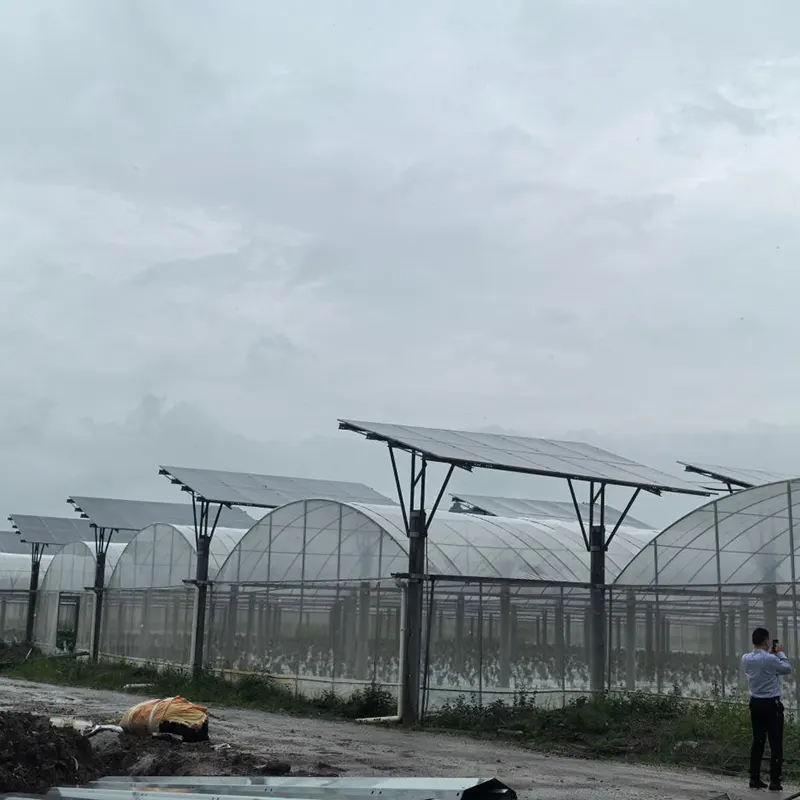
Both structures can be used for protected cultivation, but their primary functions are different. A conventional Agricultural Greenhouses configuration is mainly intended for crop production, nursery work, and weather protection. A photovoltaic greenhouse adds a reinforced roof structure for photovoltaic installation, creating a combined agricultural and solar-energy application.
| Comparison Item | Agricultural Greenhouses | Agricultural Photovoltaic Greenhouses |
| Primary Function | Crop cultivation, nursery production, and weather protection | Photovoltaic power generation combined with crop cultivation |
| Frame Load Requirement | Designed for conventional wind and snow loads and the selected greenhouse covering | Reinforced to accommodate photovoltaic modules in addition to environmental loads |
| Steel Specification | Standard structural tube specifications for the selected greenhouse type | Thicker members and additional structural support where required by the photovoltaic design |
| Cost Range | Multiple configurations from economical to reinforced structures | Higher overall project cost due to photovoltaic support and related systems |
| Land Use | Mainly used for crop production | Combines agricultural production with photovoltaic installation on the same site |
| Light Environment | Can provide high light transmission depending on the covering material | Part of the roof area is occupied by photovoltaic modules, creating partial shading |
| Operation | May require power for ventilation, irrigation, and other agricultural equipment | Photovoltaic electricity can be coordinated with suitable greenhouse electrical loads |
| Typical Project Scale | Small growers, family farms, medium-sized farms, and cultivation bases | Larger agricultural bases, agrivoltaic parks, and combined agriculture-energy projects |
For projects focused primarily on cultivation, a conventional Agricultural Greenhouses structure may be sufficient. Where the land-use plan also includes solar power generation, a photovoltaic greenhouse can be considered instead. The choice depends on crop light requirements, project scale, electrical planning, structural load requirements, and the local regulatory environment.
Photovoltaic roof layouts affect the amount of light entering the growing area, so crops should be considered before determining module spacing and roof coverage. Shade-tolerant crops, nursery plants, and other applications with lower light requirements may be easier to coordinate with partial photovoltaic coverage, while high-light crops may require a different arrangement.
1. Main structural pipes for agricultural greenhouses are bundled by type, with ends protected against impact and crushing.
2. Screws, mounting channels, spring clips, and sealing components are packaged separately, with contents matched to a detailed inventory list.
3. For export orders, component lengths are optimized for container shipping to minimize logistics costs.
4. All items are assigned unique identification numbers to facilitate on-site inventory checks, sorting, and assembly.
A conventional agricultural greenhouse is mainly designed for crop production, nursery work, and weather protection. A photovoltaic greenhouse uses a reinforced structural system that can support photovoltaic modules while retaining a growing area underneath.
The suitable crop depends on the amount and distribution of light after the photovoltaic modules are installed. Crops with lower light requirements, including some medicinal plants, leafy vegetables, nursery plants, and other shade-tolerant crops, can be considered. Module spacing can also be planned around crop light requirements.
Yes. Ruize can supply the photovoltaic load-bearing greenhouse frame and support structure separately, or provide them as a coordinated package depending on the project requirements.
Yes. Span, height, length, ventilation openings, covering materials, and selected supporting systems can be customized. The structural design can also be adjusted according to the site's climate, crop, available area, and intended operating method.
Yes. Ruize supports overseas orders and can prepare greenhouse components for full-container or consolidated-container shipment. Export packing and the required shipping documentation can be arranged according to the order and destination requirements.
Prefabricated greenhouse structures are supplied with English installation drawings and installation videos. Remote guidance is available during assembly, while the exact installation method depends on the selected greenhouse configuration and site conditions.
Yes. The structural specification can be adjusted according to local wind and snow conditions, including changes to steel member sizes, support spacing, and reinforcement arrangements where required by the engineering design.
Service life depends on the steel specification, galvanized treatment, local climate, installation quality, and maintenance. Hot-dip galvanized steel provides corrosion protection, while the actual expected service period should be evaluated according to the specific project environment.
Yes. A larger agricultural development can use conventional greenhouse structures for crops requiring higher light transmission while assigning photovoltaic greenhouse sections to areas where partial shading and combined agricultural-energy use are appropriate. Ruize can coordinate the different sections within one overall site plan.
Copyright © 2026 Tianjin Ruize Steel Co., Ltd. All Rights Reserved.