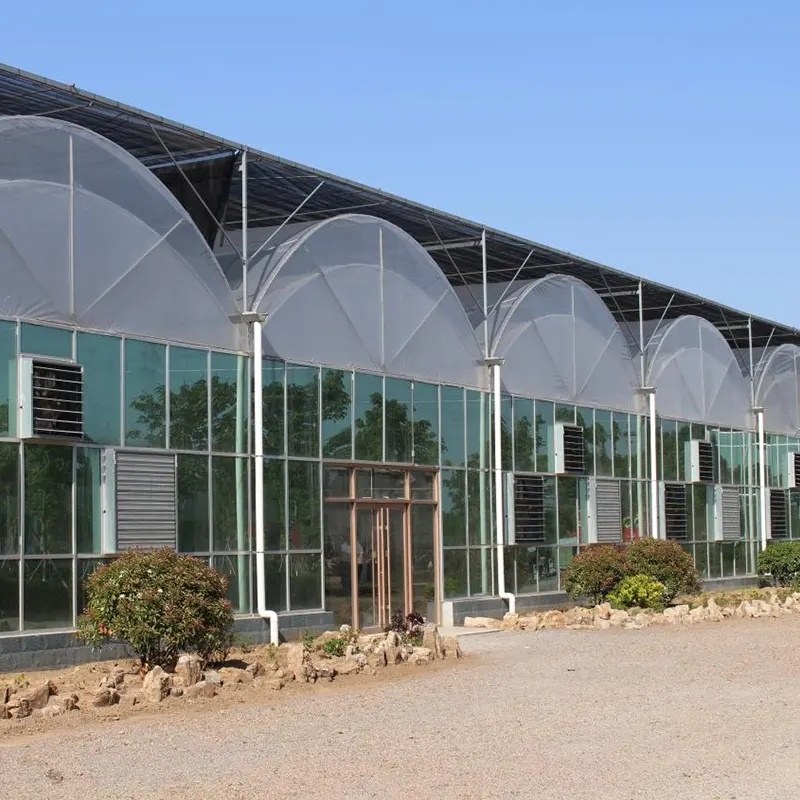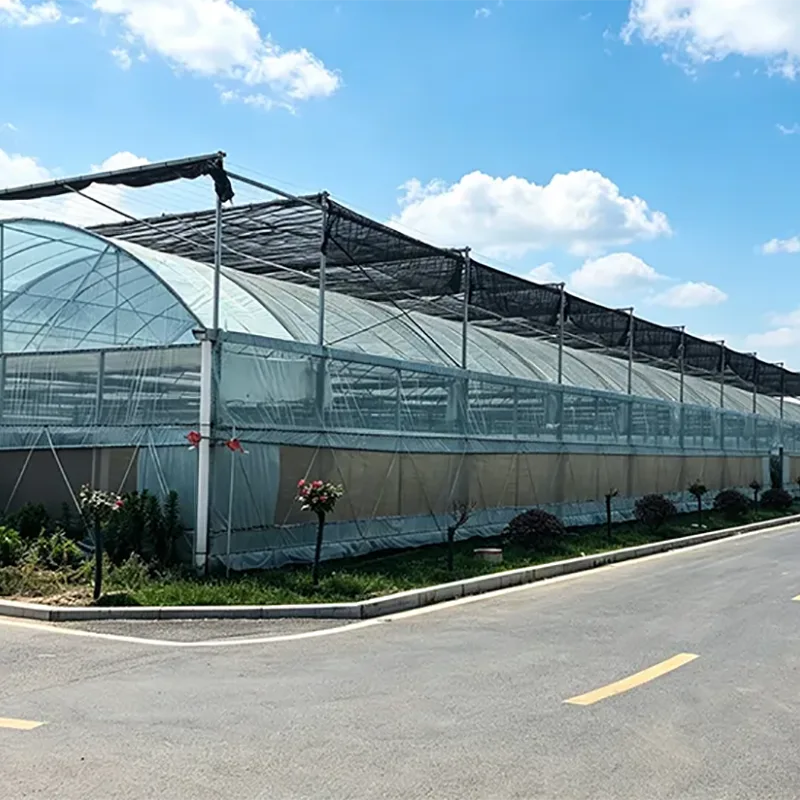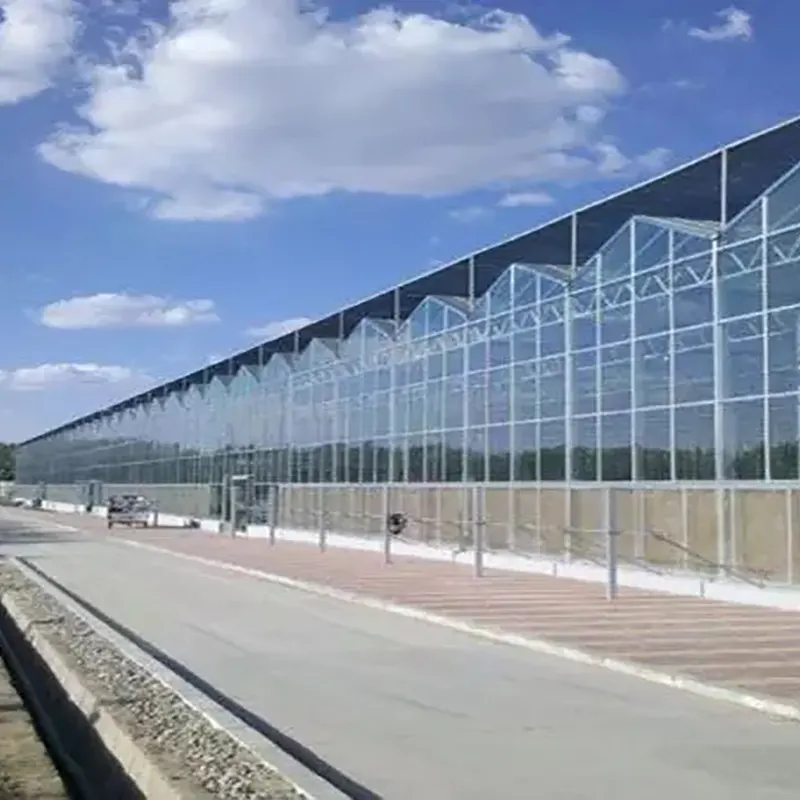
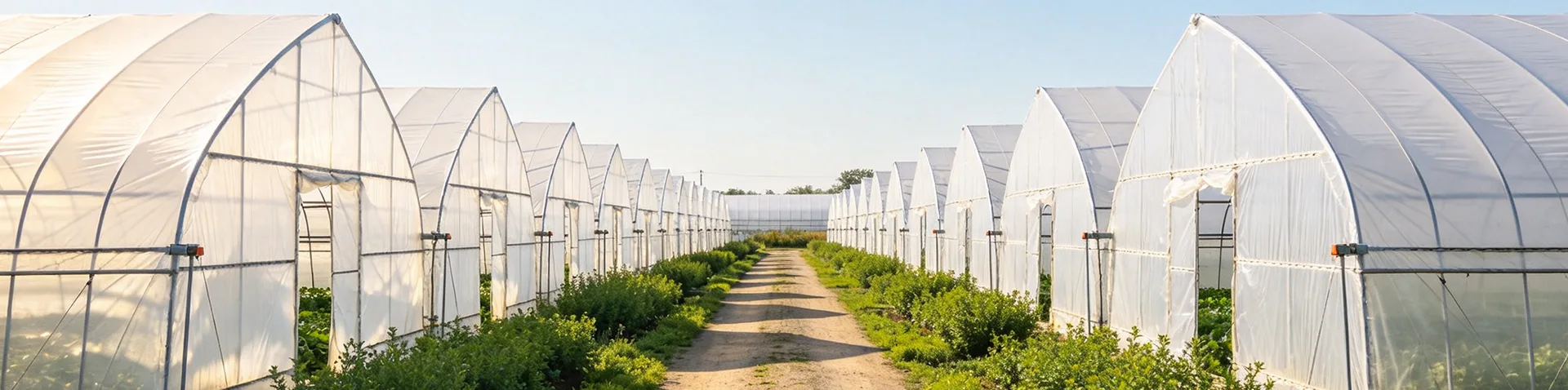
Ruize Steel is a China manufacturer and supplier of Heat Storage Solar Greenhouses for energy-efficient crop production in cold climates. Using passive solar heat storage technology, these greenhouses absorb solar energy during the day and release stored heat at night, helping reduce reliance on auxiliary heating equipment. They are suitable for agricultural projects in northern regions with abundant sunlight and large day-to-night temperature differences. Customized procurement options are available for different site conditions and cultivation requirements.
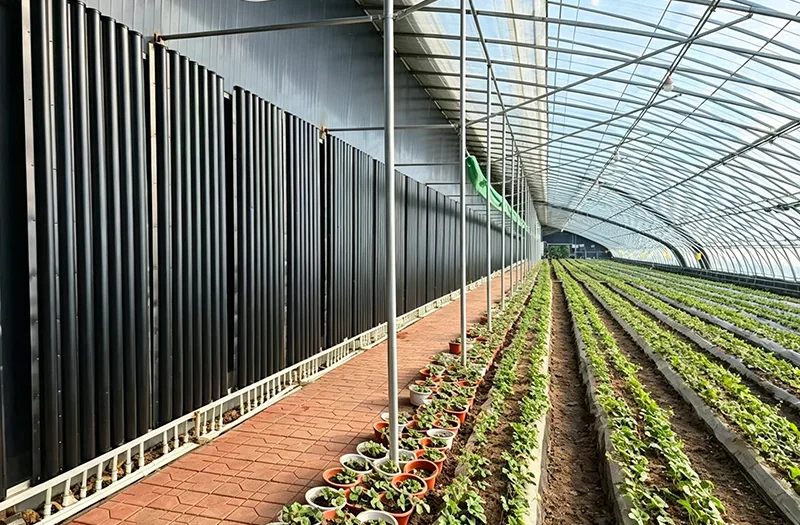
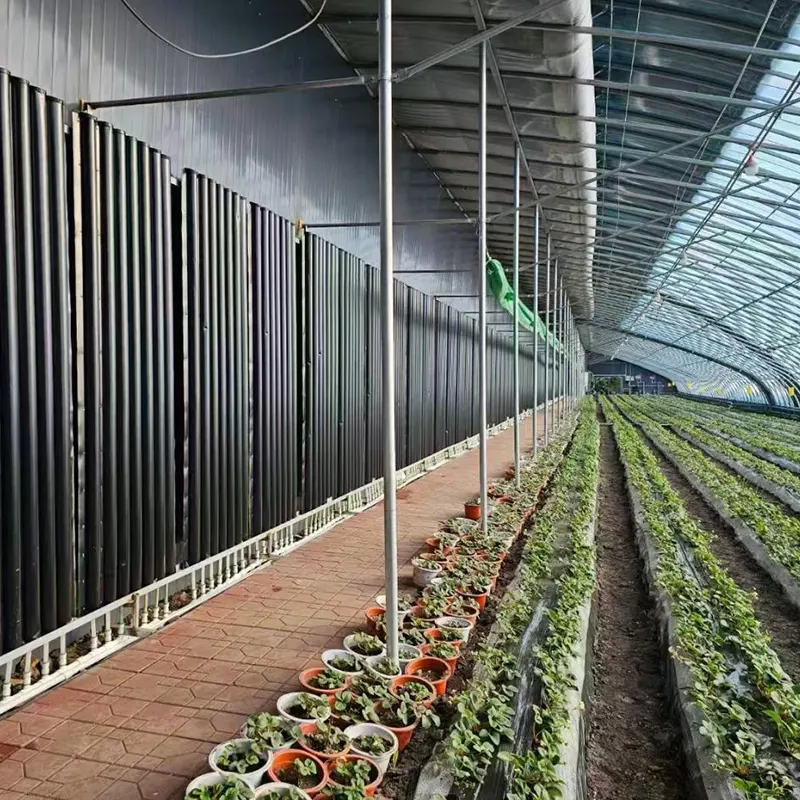
Two configurations are available: a single-slope greenhouse with a thick north-side heat-storage wall and a round-arch greenhouse with an underground water-circulation heat-storage system. The appropriate design depends on local winter temperatures, snowfall, terrain, available sunlight and construction budget.
Stores solar heat during the day and releases it at night, helping maintain a more stable indoor temperature and reduce supplementary heating demand.
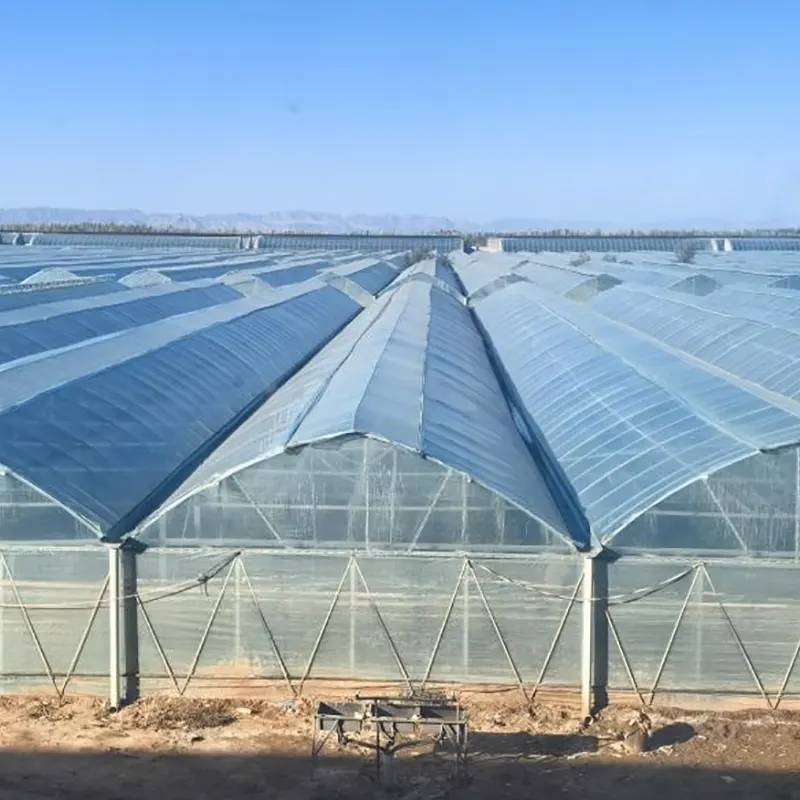
The single-slope design prioritizes heat storage in severe cold, while the round-arch design provides a large light-transmitting roof, an open interior and a curved surface that helps snow slide off.
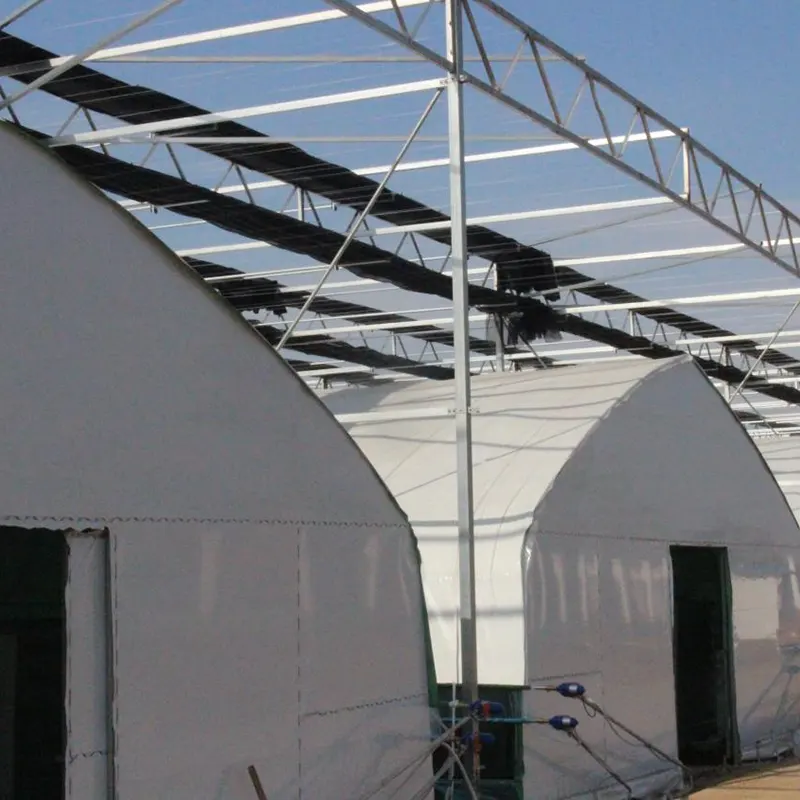
The galvanized steel frame provides corrosion protection for outdoor use in greenhouse environments. Single-layer or double-layer film configurations can be selected to suit insulation requirements.
An intelligent control cabinet, temperature sensors and a heat-circulation system can be added to automate circulation according to preset temperature settings.
Dedicated frame components can be packed separately for transportation. Assembly drawings for the heat-storage structure help coordinate steel-frame installation with the required civil works.
When selecting Heat Storage Solar Greenhouses, consider the differences in thermal storage, snow management, interior space and construction requirements.
| Comparison Item | Single-Slope Heat-Storage Greenhouse | Round-Arch Heat-Storage Greenhouse |
|---|---|---|
| Core Heat-Storage Structure | Thick solid heat-storage wall on the north side | Underground water-circulation heat-storage layer with a curved, light-transmitting roof |
| Heat-Storage Capacity | High, supporting sustained nighttime heat release | Moderate, with fast daytime warming but potentially greater heat loss |
| Cold-Climate Suitability | Designed for consideration in severe cold conditions down to approximately -25°C | Intended for conventional cold regions with temperatures around -18°C |
| Snow Management | The sloping roof may require periodic manual snow removal | The curved roof helps snow slide off, potentially reducing maintenance |
| Interior Space | The north-side wall occupies some site area, with a defined interior layout | No thick north-side wall is required, leaving a more open interior for cultivation and machinery access |
| Construction Period | Longer due to construction of the heat-storage wall | Generally faster without a thick solid wall |
| Terrain Suitability | Preferably installed on relatively level ground | Suitable for level ground and gentle slopes, subject to foundation design |
| Potential Heating Energy Savings | Approximately 40%–55% during severe winter conditions | Approximately 30%–40% during cold-season operation |
| Relative Construction Cost | Generally higher due to heat-storage wall materials and construction | Generally lower without a thick solid wall |
| Main Advantage | Greater heat storage for cold-winter cultivation | Good natural-light exposure, snow-shedding roof, open interior and lower construction cost |
Determine the greenhouse orientation according to local sunlight conditions and the approved heat-storage design. Avoid changing the specified orientation without technical assessment.
Position frame columns to avoid underground heat-storage channels and the construction area for the heat-storage wall. Confirm the foundation layout before installation.
Provide suitable moisture protection and thermal insulation around the foundation where required to help reduce ground heat loss.
Coordinate ventilation openings with the heat-storage system. Adequate air exchange is necessary for crop health, while excessive ventilation during cold weather may increase heat loss.
Specially shaped heat-storage frame components are packaged separately and labeled for easy identification. Standard steel tubes are bundled and protected, while accessories are sorted into corresponding sets.
Construction drawings for the heat-storage structure can be supplied to help coordinate the steel frame with the required wall or underground heat-storage works. Packaging and shipping arrangements should be confirmed according to the project specifications and destination.
Heat Storage Solar Greenhouses are suitable for winter vegetable production, seedling cultivation and other crops requiring a more stable growing environment in cold climates. They are particularly relevant to regions with abundant sunlight and substantial day-to-night temperature differences.
The single-slope type suits projects that prioritize heat storage during severe winters. The round-arch type may be more appropriate where an open interior, natural-light exposure and snow management are important considerations.
Ruize Steel offers two heat-storage greenhouse configurations to suit different winter conditions, terrain and construction requirements. The frame, covering system and heat-storage arrangement can be selected according to the planned crops, local climate and project specifications.
For overseas projects, modular frame components, accessory sets and construction drawings can support transportation and on-site assembly. The heat-storage wall or underground storage system should be coordinated with the structural design before production and installation.
The single-slope type is generally preferable for severe cold, while the round-arch type may suit areas with heavier snowfall or gently sloping terrain.
Yes. A compatible double-layer film structure provides additional insulation alongside the solar heat-storage system.
The primary heat source is solar energy. Circulation fans, temperature sensors and optional control equipment require electricity.
It uses an underground water-circulation heat-storage layer. Capacity should be selected according to the local climate and crop requirements.
Yes. An optional control cabinet and temperature sensors can automate circulation according to preset temperature settings.
The round-arch type can be configured for multi-span construction. The single-slope type is generally designed as an individual greenhouse; connected layouts require separate assessment.
The frame can be customized for local wind and snow loads. Proper fasteners, bracing, foundations and installation are essential.
The single-slope type may suit level sites with severe winters, while the round-arch type may suit snowy areas or gently sloping sites. Confirm local engineering requirements before ordering.
Yes. Local materials can be used when the wall dimensions and frame interfaces are coordinated. A compatible material and construction plan can also be provided.
A round-arch greenhouse may be adapted by adding an underground heat-storage and circulation system. A single-slope conversion requires additional construction for the heat-storage wall.
Copyright © 2026 Tianjin Ruize Steel Co., Ltd. All Rights Reserved.