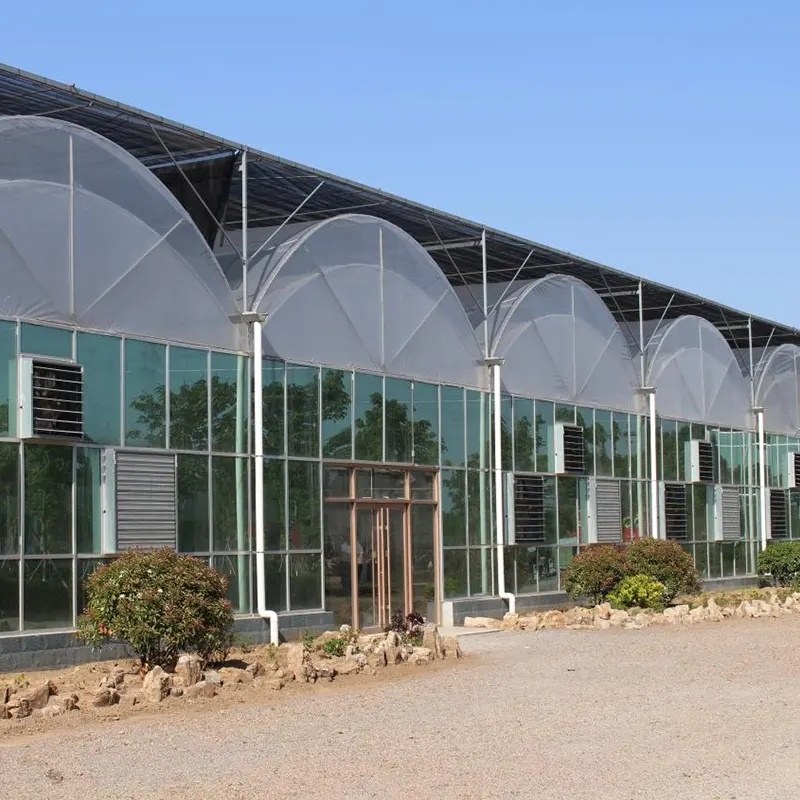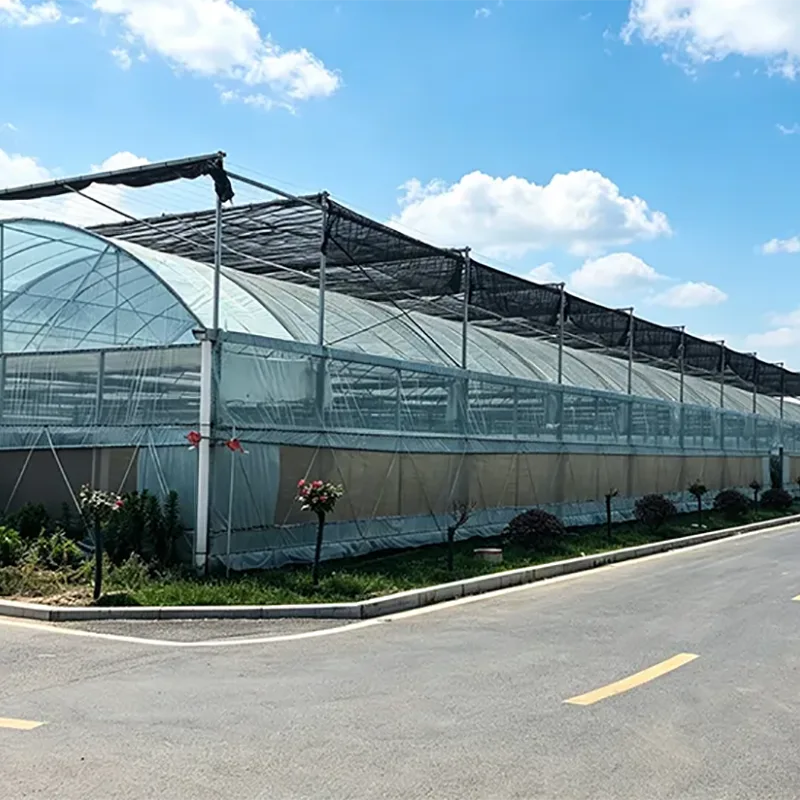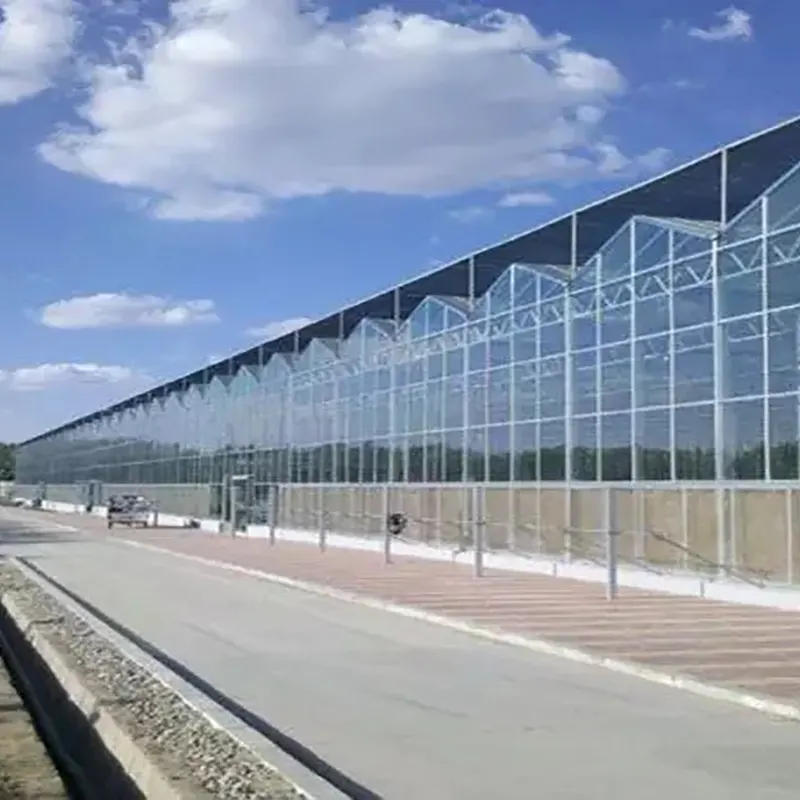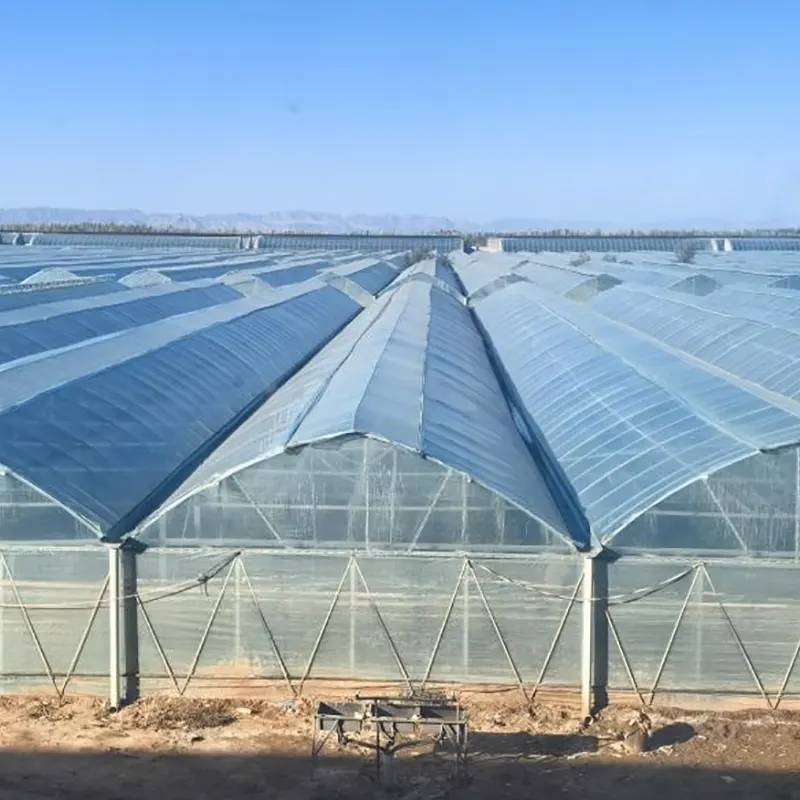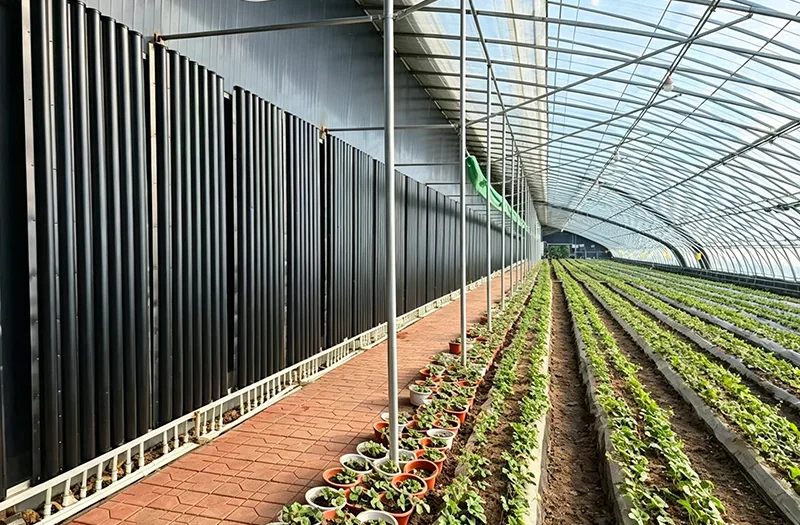
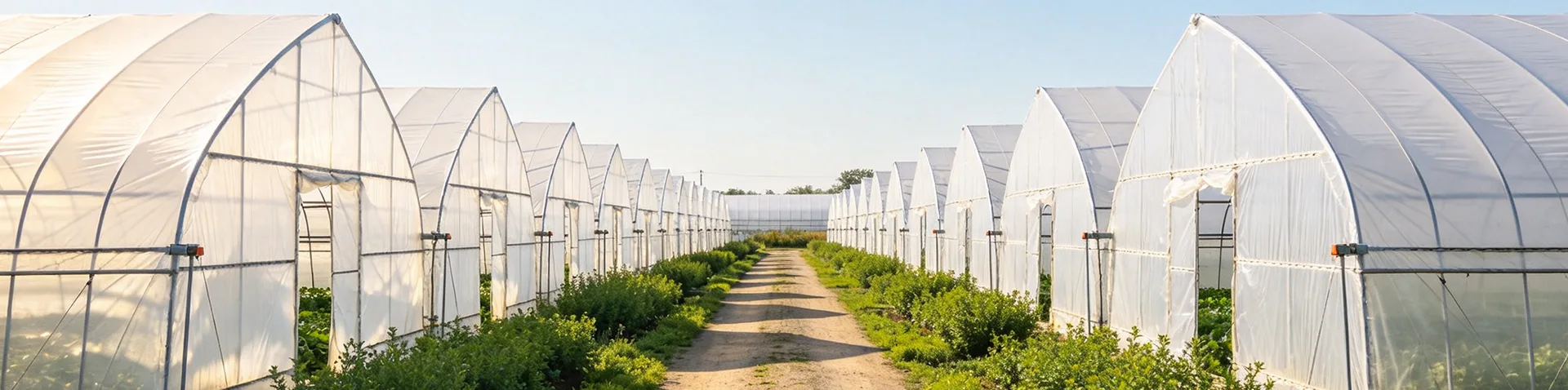
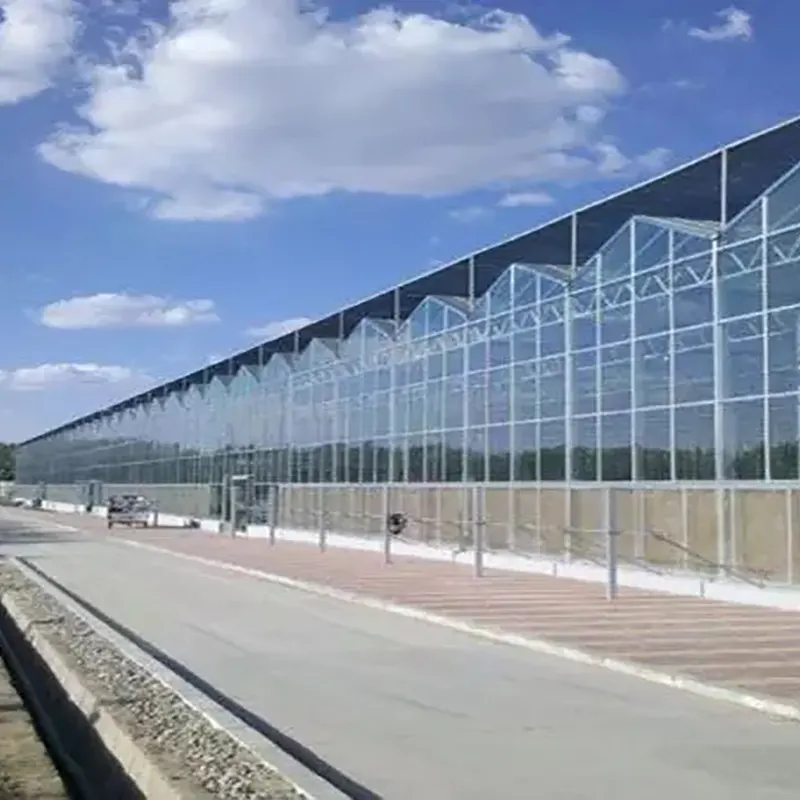
In tropical and subtropical growing regions, effective heat and humidity removal is essential for greenhouse crop production. Ruize Steel, a China manufacturer of agricultural greenhouse structures, supplies Sawtooth Multi-Span Greenhouses for commercial growing projects that require efficient natural ventilation. Single-side, roof-vent and double-side sawtooth configurations are available for project procurement, with the structure and vent layout customized to local climate, prevailing wind direction and crop requirements.
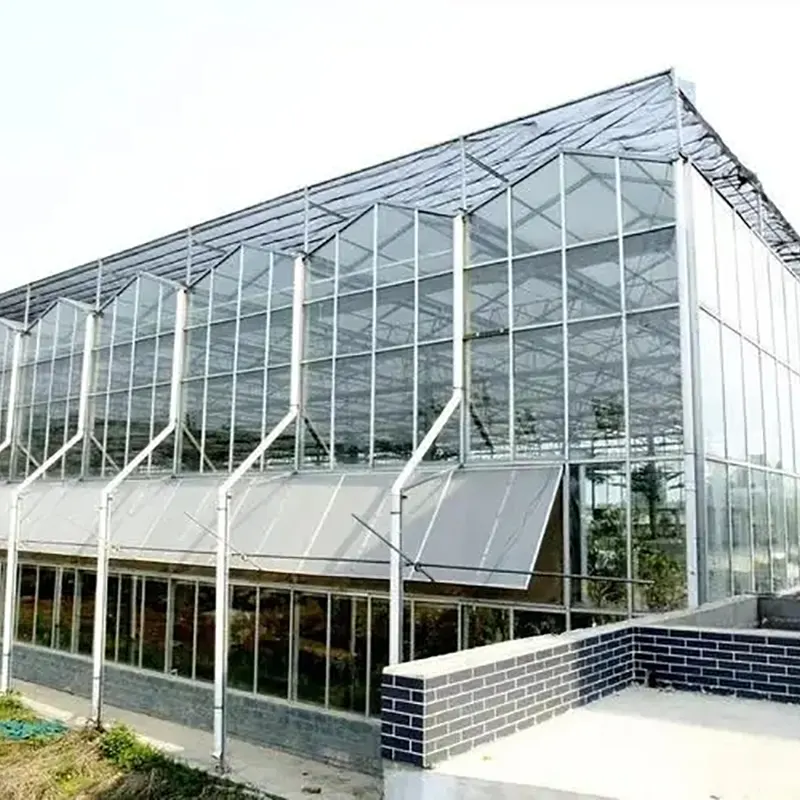
The stepped roof profile creates high-level openings that allow warm air to escape as cooler air enters through lower openings. This passive airflow can reduce dependence on mechanical cooling and is particularly useful in hot, humid climates where heat buildup and excess moisture can affect crop growth.
The raised roof openings allow accumulated hot air to escape through natural convection. This helps remove heat and moisture without relying entirely on exhaust fans, potentially reducing cooling energy consumption.
The stepped roof and integrated gutter arrangement are designed to direct rainwater away from the greenhouse. Proper gutter sizing, drainage slopes, waterproof connections and maintenance are essential for managing heavy rainfall and reducing leakage risks.
Galvanized steel components provide corrosion protection for humid agricultural conditions. The appropriate coating specification and maintenance schedule should be selected according to local humidity, rainfall and other exposure conditions.
The covering material and roof layout can be selected to provide suitable natural light distribution across the growing area. This helps support more consistent crop management, while the actual light environment depends on the covering material and greenhouse orientation.
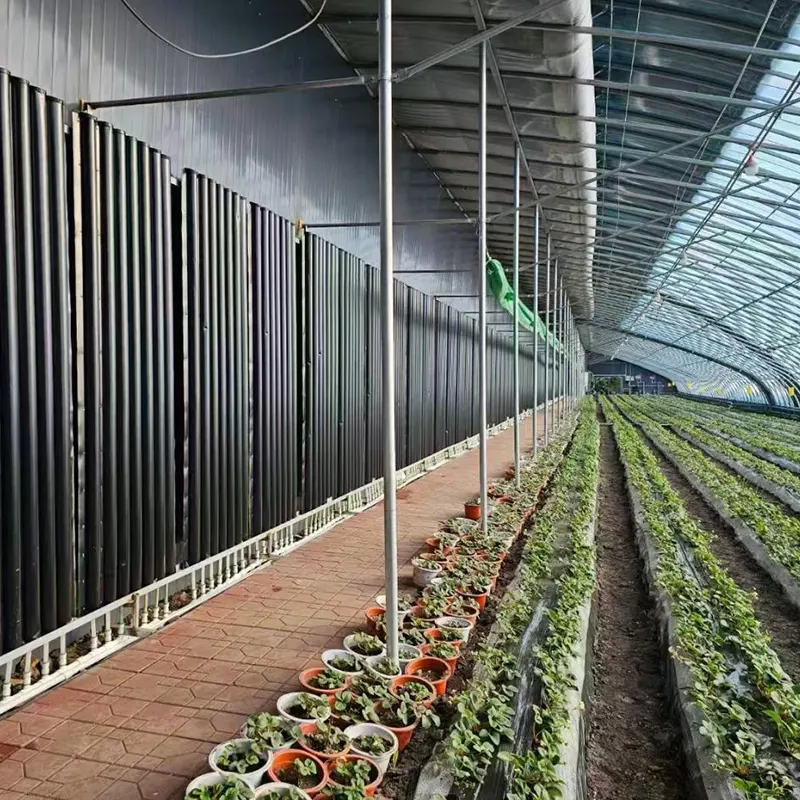
The multi-span layout creates a continuous cultivation space with fewer obstructions in the main working areas. It can accommodate commercial crop rows, irrigation equipment and routine farm operations.
The greenhouse can use manual natural ventilation or optional motorized roof vents and intelligent controls. The configuration can be matched to the scale of the farm and the level of environmental management required.
The three configurations differ in ventilation capacity, automation, structural requirements and investment level. The following table provides a practical reference for project selection.
| Comparison Item | Single-Side Sawtooth Multi-Span Greenhouse | Sawtooth Greenhouse with Roof Vents | Double-Side Sawtooth Multi-Span Greenhouse |
|---|---|---|---|
| Main Application | Economical greenhouse for general natural ventilation | Controlled ventilation for higher-value crop production | High-capacity ventilation for demanding hot and humid climates |
| Ventilation Structure | High-level openings on one side for natural airflow | Sawtooth openings combined with motorized roof vents | Staggered openings on both sides for cross-ventilation |
| Cooling Performance | Suitable for conventional summer growing conditions | More controllable heat removal during hot weather | High natural ventilation capacity for hot, humid environments |
| Humidity Management | Basic moisture removal for general crop production | More responsive ventilation helps reduce excess humidity | Greater airflow potential helps remove moisture more effectively |
| Automation | Basic manual ventilation | Motorized roof vents with optional intelligent controls | Can be integrated with coordinated ventilation and climate-control systems |
| Structural Configuration | Standard structural load configuration | Reinforced configuration for roof-vent equipment and associated loads | Denser framing and reinforced structure where required by design |
| Crop Management | Suitable for general commercial cultivation | Useful where humidity control is important for crop quality | Suitable for intensive production in demanding humid conditions |
| Relative Construction Cost | Lowest of the three configurations | Moderate, depending on the vent and control systems | Medium to high, reflecting additional structural and ventilation requirements |
| Main Advantage | Economical construction and straightforward operation | Adjustable ventilation for more precise crop management | High natural airflow potential for large-scale growing projects |
Specializing in customized ventilation solutions for sawtooth-style multi-span greenhouses in high-temperature regions:
1. Assess site wind direction and prevailing high-temperature climate data;
2. Design single-sided or double-sided sawtooth roof vent layouts;
3. Customize structural specifications for vent height and opening angle;
4. Specialize in the fabrication of non-standard structural framing;
5. Ship complete systems and provide installation guidance for the ventilation structure.
The production sequence focuses on frame accuracy, weather protection and reliable operation of the ventilation openings.
Process flow: Material selection for local climate conditions → Standard frame fabrication → Precision cutting and bending of sawtooth roof components → Finishing of waterproof joints and seals → Galvanizing and corrosion protection → Vent opening and operating checks → Accessory matching and packaging.
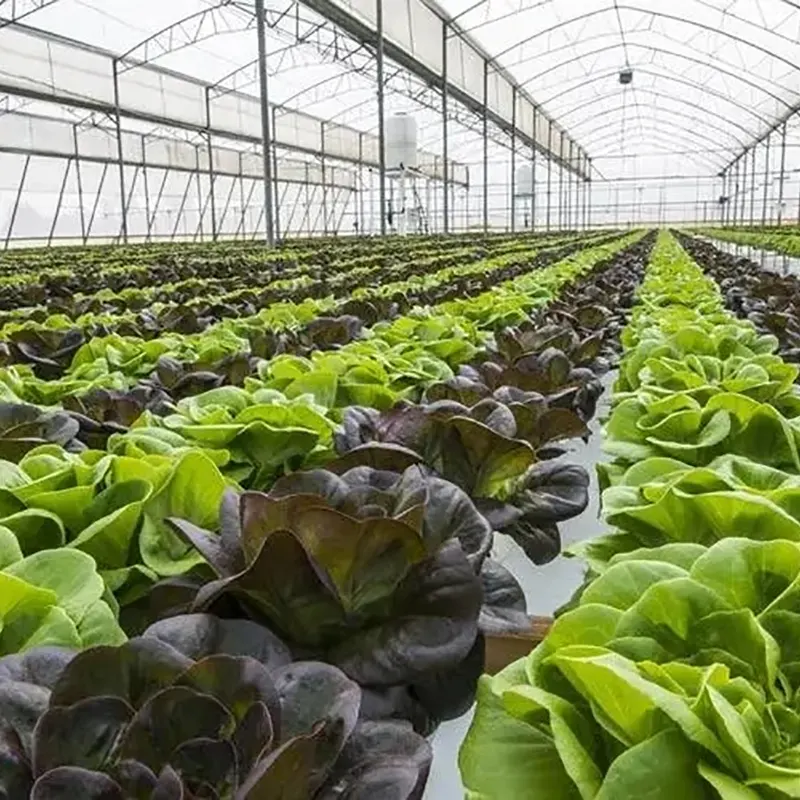
Sawtooth Multi-Span Greenhouses are suitable for commercial crop production in tropical and subtropical regions where natural ventilation is a priority. Typical applications include leafy vegetables, fruiting vegetables, flowers, nursery plants and other crops that benefit from improved heat and humidity management.
The single-side model suits projects prioritizing economical construction. The roof-vent model provides more adjustable ventilation, while the double-side design may be appropriate for large cultivation facilities with higher airflow requirements.
Choose the single-side model for economical production, the roof-vent model for controlled ventilation, or the double-side model for demanding hot and humid conditions.
The elevated roof openings support natural convection and high-level heat removal, reducing reliance on mechanical ventilation when weather conditions are suitable.
The roof and gutter system can be designed for effective drainage. Proper installation, adequate drainage capacity and regular maintenance are essential during heavy rain.
Yes. Motorized vents can be integrated with compatible temperature and rain sensors and an intelligent control system.
Yes, subject to structural compatibility and project requirements. Film is a common option, while PC panels and glass can be considered for specialized projects.
Yes. Steel sections, column spacing, bracing and foundations can be specified according to local wind loads.
Natural ventilation may reduce heat buildup, but the actual temperature difference varies with weather, opening area, crop density and site conditions. Mechanical cooling may still be required in extreme heat.
Yes. Multiple spans can be connected, with drainage, ventilation and control systems coordinated for the overall layout.
Potential upgrades include roof vents, internal or external shading, spraying equipment and temperature controls. Compatibility with the existing frame should be checked before modification.
Copyright © 2026 Tianjin Ruize Steel Co., Ltd. All Rights Reserved.